The Internet Has Thoughts About Guitar World's TWA Source Code Review.
Guitar World says the man who invented the Tube Screamer just beat his own pedal. Owners paying $299 to find out are not arguing.
Two sides. One page.
Johnny argues the piece. Then he argues against himself. Somebody has to check his work. Read both, then call the winner below.
The take is shown below.
Source
“The Source Code, from TWA (Totally Wycked Audio), is one of the finest TS808-style overdrive pedals I've heard.”
What the internet actually said
“Just one of the Best overdrive I've ever used. Clear, warm overdrive with a lot of headroom.”
Godlyke · t.l.c.
“The disparity in volume is a bit much, and the level knob doesn't seem to be much help in addressing that concern.”
Totally Wycked Audio · m.y.
“I'm finding it to be very versatile, sounding equally good with single coils and HBs.”
Totally Wycked Audio · h.h.
The Suede Read
Guitar World handed the TWA Source Code a headline most pedals never get: a near-perfect TS808-style pedal from the designer of the Tube Screamer that could arguably be the new gold standard. The line inside it goes further, calling the Source Code one of the finest TS808-style overdrive pedals the reviewer had heard. Against the most cloned circuit in the history of the format, that is a very large thing to say.
The provenance behind the claim is real, and it is the entire pitch. TWA's own page states that in 1979 the Japanese electronics engineer Susumu Tamura designed the Ibanez TS808 Tube Screamer, and sells the Source Code as his return to it. The pedal costs $299, a figure printed on both the manufacturer's store and that of Godlyke, its US distributor.
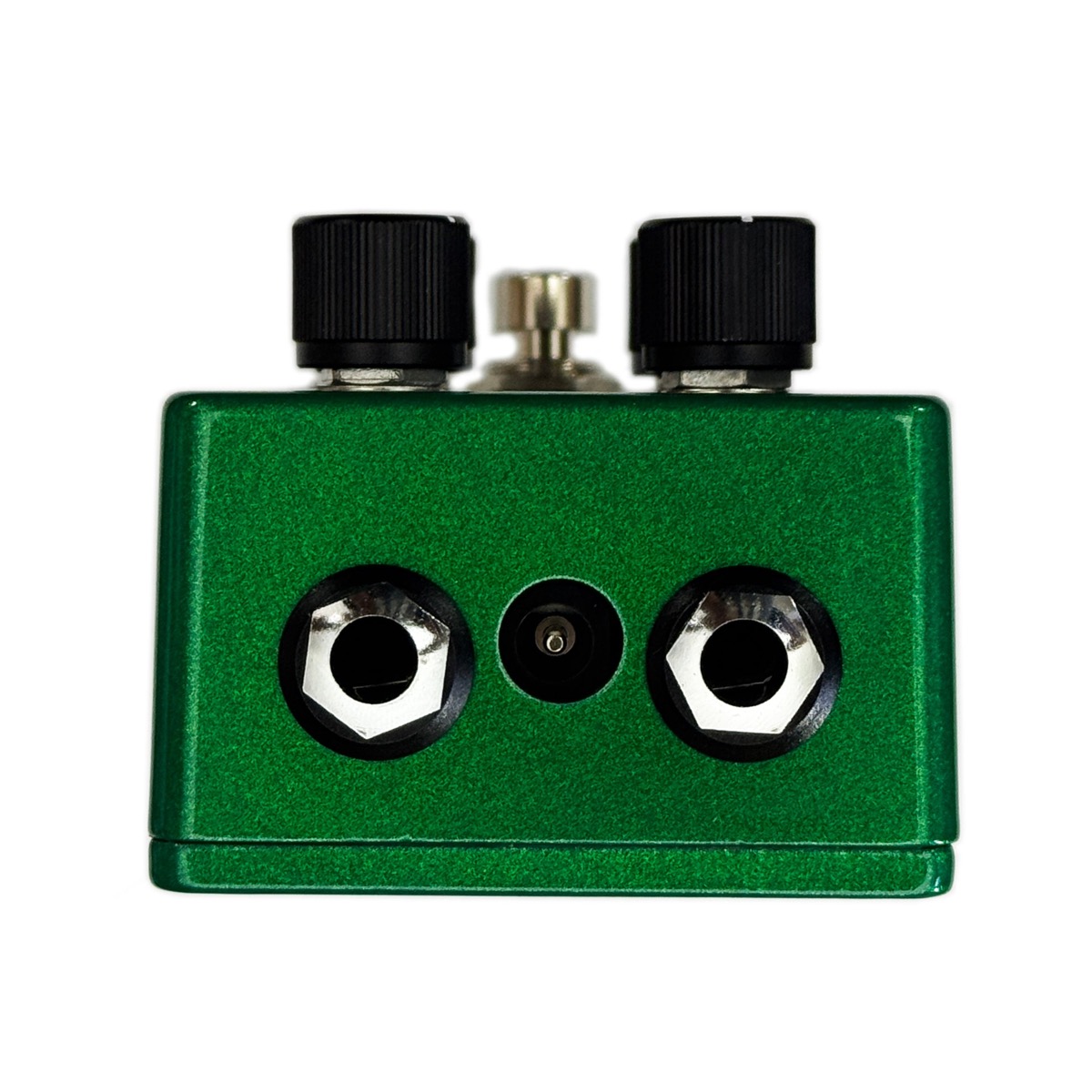
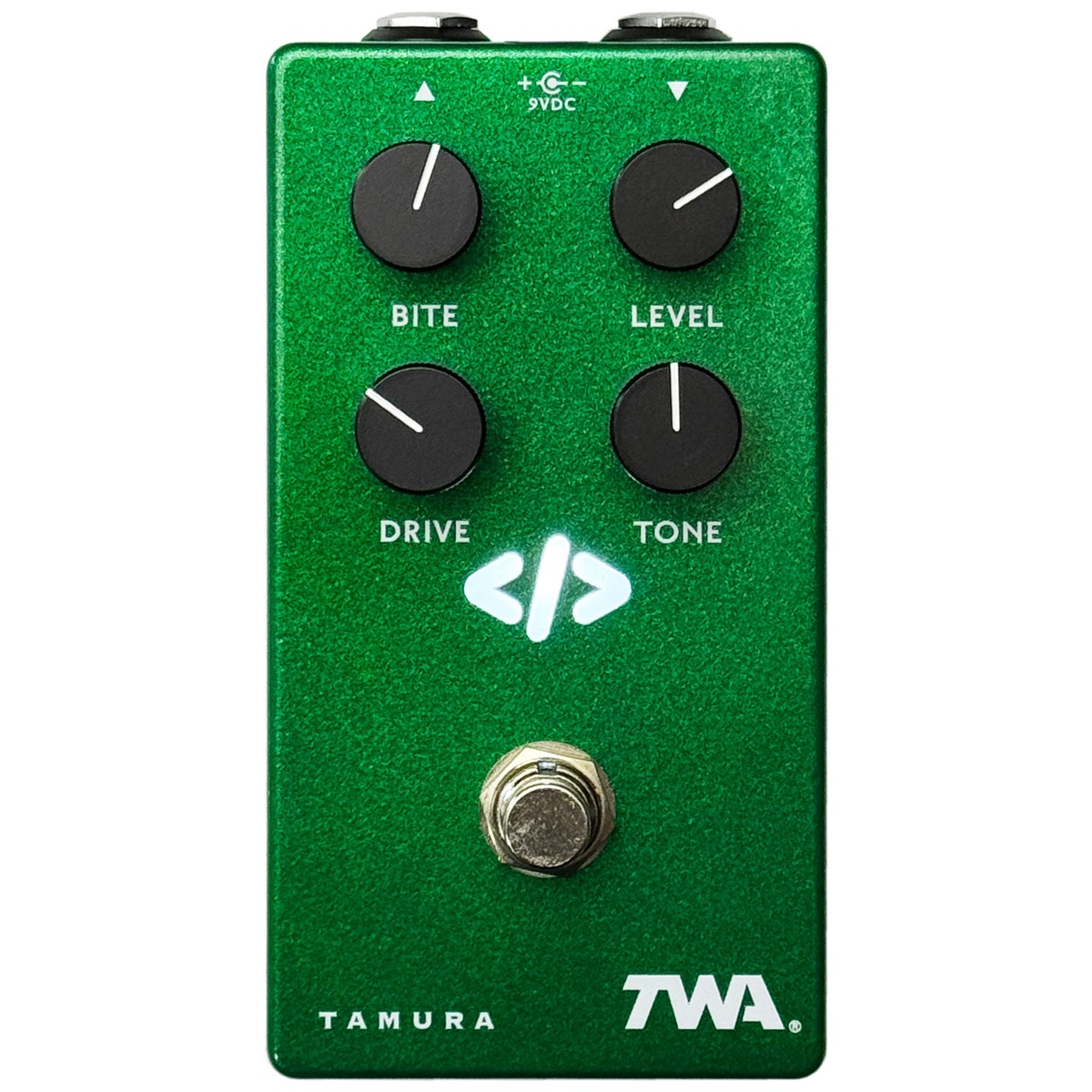
Past the headline, the review sits behind Guitar World's membership gate. So the only technical account of this circuit anybody can read without paying is the one written by the company selling it, and it is worth reading with that stamped on it. TWA claims an all-new multi-transistor input buffer that preserves the guitar's original tone, and an exclusive part it calls a Magic IC where the format normally puts a JRC4558. The new control is Bite, which the company says alters the balance of odd and even-order harmonics, shifting from symmetrical toward asymmetrical clipping as you turn it up. Four knobs total: the classic three, plus that one.
The owner record is both lopsided and awkwardly located. Godlyke's listing shows 23 reviews averaging five stars, a clean 100 per cent. TWA's own store shows 14 more, at 92.3 per cent. Both storefronts belong to the people selling the pedal, which has to be said out loud before any of it counts as corroboration of anything.
Said out loud, the reviews are still specific rather than gushing. A French buyer calls it just one of the best overdrives he has ever used, clear and warm with a lot of headroom, and worth its price. Another goes straight at the comparison the format invites: best TS808 or TS9 ever. A third boils the whole thing down to great tone and very easy to use. A fourth finds it very versatile, sounding equally good with single coils and humbuckers, and says it works both as an effect for solos and in an always-on base-layer role.
One buyer confirms the Bite control does what the company says it does, in the most ordinary way available: he found a setting he liked and now only touches Bite for minor changes. A modern blast from the past, he calls it, which is roughly the review's thesis arrived at independently by somebody who paid.
Then, inside a five-star review on the maker's own store, the only functional complaint on the entire public record. He describes a learning curve with the level knob while trying to balance his bypassed clean Telecaster against the pedal switched on. The disparity in volume is a bit much, he writes, and the level knob does not seem to be much help in addressing that concern. The engaged level is still fairly loud turned all the way counter clockwise. That was not what he was expecting.
That is a minimum-output complaint, and it is a bench-testable one: at the bottom of its travel the pedal will not get quiet enough to sit level with a clean signal. He is not angry about it. He says he is having fun, imagines it will take some playing to dial in, and gave five stars anyway. But it is concrete, it is reproducible, and it is the only such report anybody has published.
Whether the review deals with it cannot be established from outside the paywall, and scoring a magazine on a document nobody can open would be its own kind of fiction. What the free record supports is narrower than the headline and not remotely hostile to it: thirty-seven owner reviews across two seller-run storefronts, no independent retailer record found, one usability note, nothing about tone, nothing about price. The pedal is currently listed sold out, with roughly a week of build time behind each order.
Nobody is arguing about $299 buying a variation on a 47-year-old circuit. Thirty-seven buyers, two storefronts, one complaint about a volume knob. When the engineer who wrote the original ships a revision, the tax looks worth paying.
Spotted something the press fluffed? info@suedeai.ai
The counter, argued by Johnny Suede
The column bought the origin story at full retail. The man who invented the Tube Screamer is a marketing frame, and $299 for a TS variant is the boutique tax this masthead bills everyone else for.
Press was right, rules the column, largely on the strength of the byline inside the pedal: Susumu Tamura, the engineer who designed the original TS808. Hold that frame up to the light. Circuits at Maxon in 1979 were team products of a company's engineering department, iterated across revisions, built from an op-amp application note the whole industry was reading. Tamura's involvement is real and meaningful. The lone-inventor-returns framing is a story shaped for exactly the reaction this column had, and the column, whose entire mandate is detecting shaped stories, reprinted it as provenance.
Then the price. Two hundred ninety-nine dollars for a Tube Screamer variant with a new input buffer and a Bite control. When JHS charges a premium on a Bluesbreaker circuit, this masthead calls it a fashion problem. When Keeley boxes two classic circuits at collab prices, it is souvenir pricing. The identical transaction, legacy circuit plus narrative plus margin, arrives here wearing a Japanese engineering legend, and the column waves it through. One boutique tax code per publication, please.
What the receipts actually establish is narrower than the verdict: buyers who paid $299 to participate in a good story are satisfied participants. Of course they are; the story is excellent and the pedal, by all accounts, is competent. Whether it beats the five TS clones in the sixty-dollar bin through a blind A/B, level-matched the way this magazine's own methodology essay demands, is the checkable claim, and nobody in the post checked it. Agreeing with the press because the story is good is fluff with extra steps, and it happened on the receipts desk.