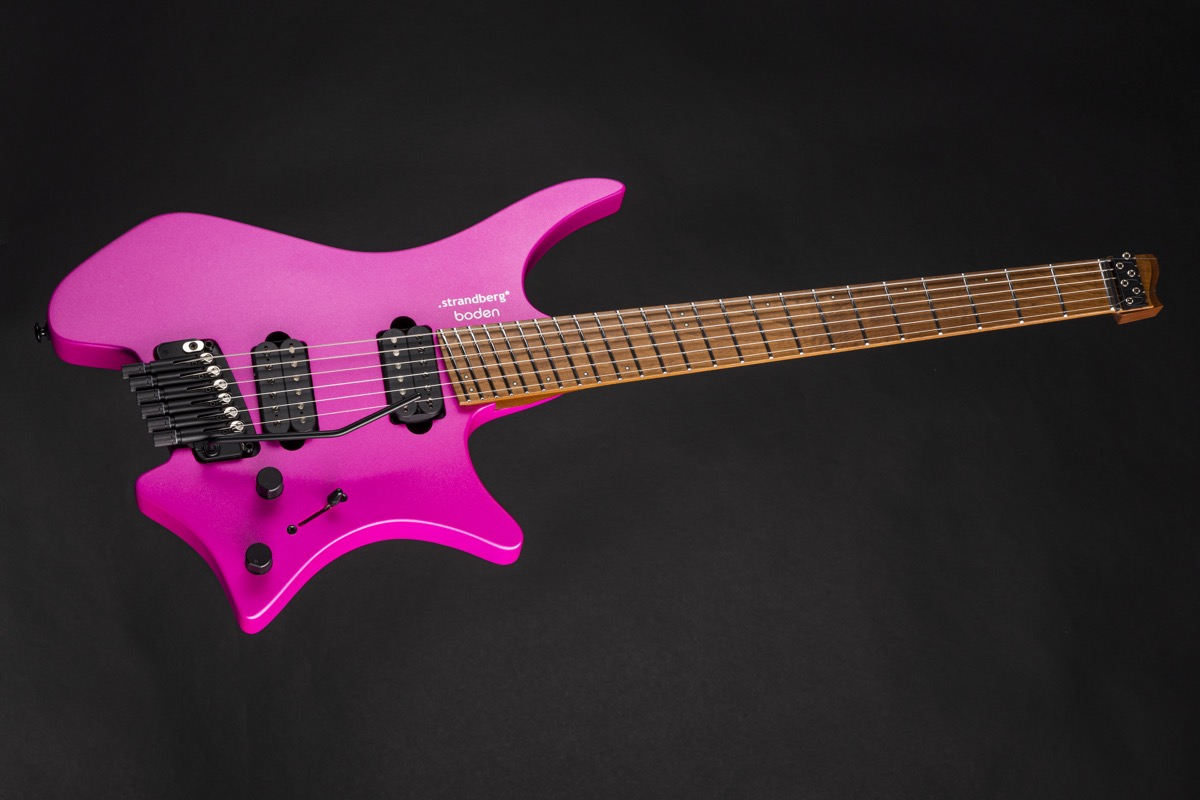
The Internet Has Thoughts About Guitar World's Strandberg Boden Standard N2 Review.
Guitar World gave it five stars. The forum is still debating whether the neck is a feature or a bug.
Two sides. One page.
Johnny argues the piece. Then he argues against himself. Somebody has to check his work. Read both, then call the winner below.
The take is shown below.
Source
“The same magnificent playing experience as other Boden models.”
What the internet actually said
“The weird trapezoid shape will be odd to get used to, and I bet you'll end up changing your technique.”
Seymour Duncan Forum · m.m.
“My Strandbergs DID make me play in the classical position and with a different thumb placement... and I felt better for it !”
Seymour Duncan Forum · p.
“I see Strandbergs as rather faddish and I wonder if they will be desirable 20 years from now.”
Seymour Duncan Forum · i.i.
The Suede Read
Guitar World's headline sells the Boden Standard N2.6T in a single clause: the new vibrato only adds to the appeal, and it is easy to see how this guitar could do the business equally well for metal, jazz-fusion or function gigs. The verdict line is shorter and larger. The same magnificent playing experience as other Boden models. Five stars, and the only con on the sheet is a question about the paint.
That review is behind Guitar World's membership gate now, so what is left in the open is a spec sheet and several years of guitarists arguing about the neck. Both turn out to be more useful than the con.
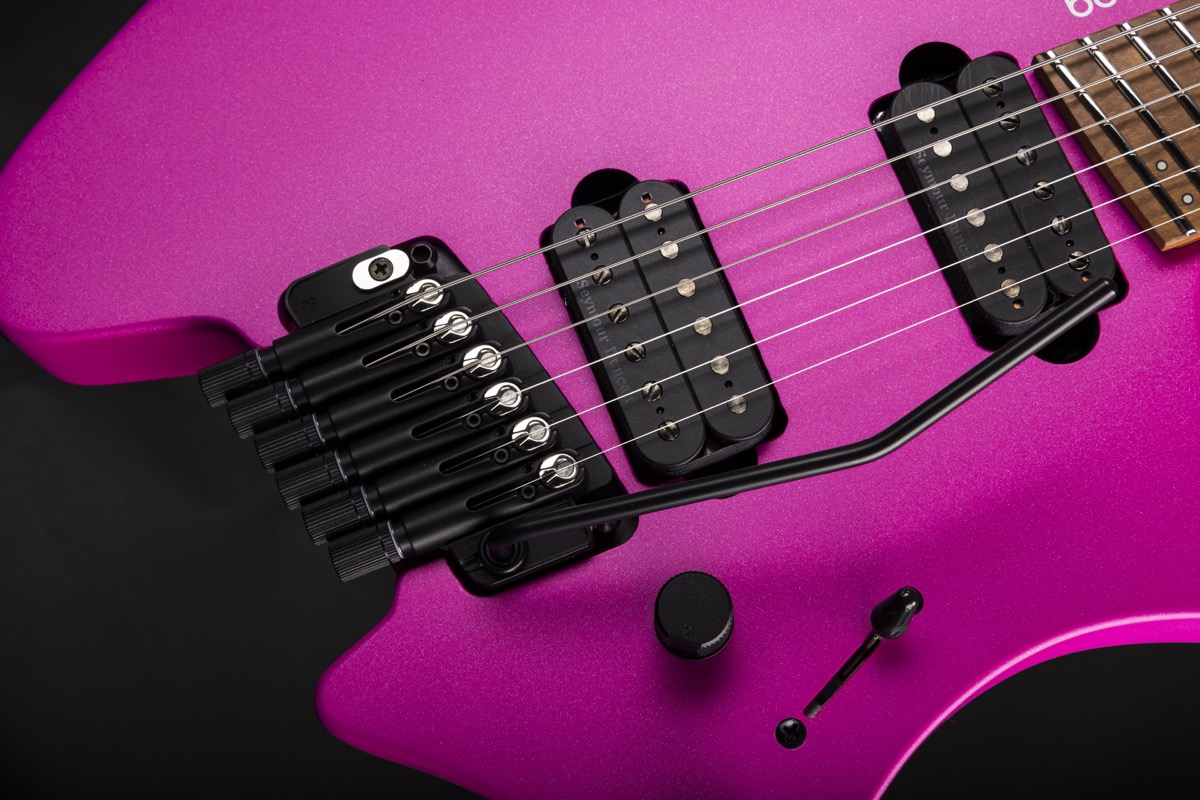
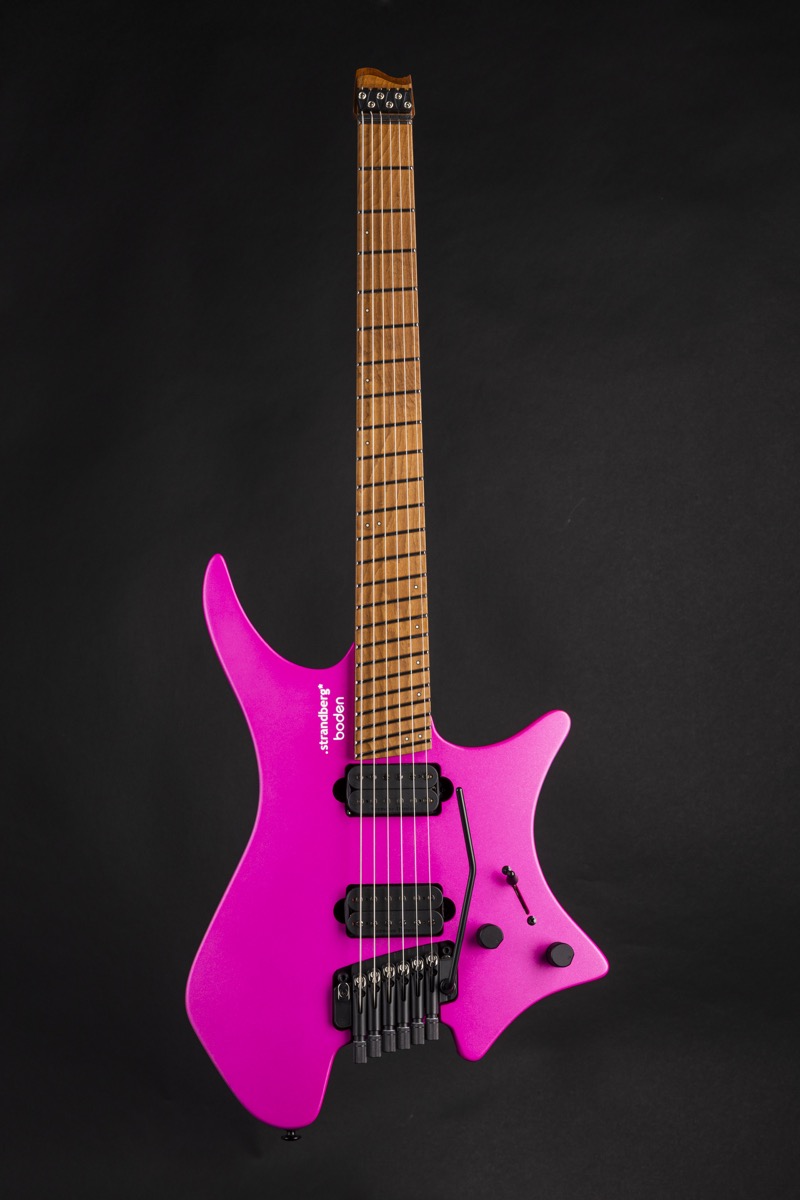
Start with the spec, because one number matters later. Strandberg's own store lists the Standard N2.6 at $1,799 before tax, built around a titanium-reinforced roasted maple EndurNeck, Seymour Duncan Pegasus and Sentient humbuckers, and the multi-scale Arc hardware this generation introduced. The multiscale fan runs from 25 inches to 25.5. Half an inch, spread across six strings.
The neck is the product. Strandberg's patented EndurNeck profile, in the company's own words, promotes a natural, relaxed hand position, improves endurance and reduces strain. When a five-star verdict reaches for magnificent playing experience, that is the thing it is describing, and it is the one claim in the review that owners have been stress-testing in public for years.
The Seymour Duncan Forum runs a long thread on exactly this, and it refuses to divide the way an argument is supposed to. One member states it as a condition rather than a verdict. If your thumb is always in the dead centre of the back of the neck, he says, you will love it. If your thumb moves anywhere else, the weird trapezoid shape will be odd to get used to, and he bets you will end up changing your technique.
The reply comes from a man who owned two of them and had plenty to complain about otherwise. His Strandbergs did make him play in the classical position and with a different thumb placement, he writes, and he felt better for it. He uses that on all his guitars now, pretty much.
Those two are not describing different instruments. They are describing the same mechanism and disagreeing about the bill. The neck moves your thumb. One member counts that as a cost paid in retraining, the other counts it as a habit he kept and then exported to everything else he owns. Neither says the ergonomic claim is false, and the ergonomic claim is what the five stars are resting on.
The same owner is far less generous about the other headline feature. The half-inch fan on his six-string was completely useless, he writes, and worse, the fan sits entirely at the bass end, which did not follow his natural hand placement at all. He would rather the neutral fret sat at the bridge, though he grants he has not played a guitar built that way. He also says flatly that both his Strandbergs were worth way less to him than their price tags: one with a buzz he could never clear and a string guide cut unevenly, the other with enough wrong that he sent it back.
Two things have to be said before that receipt is worth anything. Those posts are from 2019, and they concern earlier Boden models rather than the guitar under review. But the fan he calls useless is the same half inch the N2.6 ships today, and the EndurNeck he credits with changing how he plays is the same patented profile, so the parts of his account that bear on the review's central claim have not expired.
The other running argument never resolves, which is its nature. A member in a separate thread says he sees Strandbergs as rather faddish and wonders whether they will be desirable twenty years from now, and guesses not. Another in the same thread answers in one line: he currently has a Strandberg and it is his workhorse. Neither of them has touched an N2.6, and neither is pretending to have.
Which marks the honest limit here. There is no public owner record of this guitar yet, only of the platform and of the neck profile it carries forward, and the review's sole recorded con is about colour. Strandberg does list an Electric Fuchsia Metallic finish in the N2 range, so the pink is real enough and the question is fair as far as it goes, which is not far.
Split. The magnificent playing experience holds up better than a five-star claim usually does, because owners of the older guitars keep confirming it without being asked, and one of them changed how he holds every instrument he owns. What the score never mentions is that the neck asks for something before it gives anything back, or that the half-inch fan in the marketing has an owner calling it useless. Five stars. One con. It is about the paint.
Spotted something the press fluffed? info@suedeai.ai
The counter, argued by Johnny Suede
The two-realities framing is about social discomfort, not the instrument. A review's job is the guitar, not your bandmates' comfort, and the forum's twenty-year prophecy is not a receipt.
The column's split verdict rests on the Strandberg existing in two parallel realities: precision instrument in one, the guitar that makes rehearsal awkward in the other. Read the second reality closely. Bandmates uncomfortable, strangers asking questions, a forum predicting it will be forgotten in twenty years. Not one item in that reality is a property of the instrument. It is a catalog of other people's feelings about how the instrument looks, and Guitar World's five-star review was of the guitar, which by the column's own receipts delivers ergonomics that owners call life-changing. The review and the reality it was scored against are about different subjects.
The one-listed-con, is pink your color, gets waved as evidence of a toothless critical apparatus. Consider the alternative reading: a mature platform on its Nth revision, whose engineering questions were litigated in previous reviews, genuinely reduces to preference at the margins. Demanding manufactured cons for balance is the same theater as the unused bottom half of the ratings scale, just pointed the other direction. Sometimes the honest cons list is short, and a desk that punishes short cons lists is commissioning fluff of its own flavor.
As for the twenty-year prophecy: unfalsifiable, free to issue, and with a miserable track record as a genre. The same forums forecast the headless format's death in the eighties, the seven-string's death twice, and modeling's death annually since 2004. A receipts operation should know a receipt from a horoscope. The wrist that stops hurting is the data. The rehearsal-room side-eye is weather, and it passes.