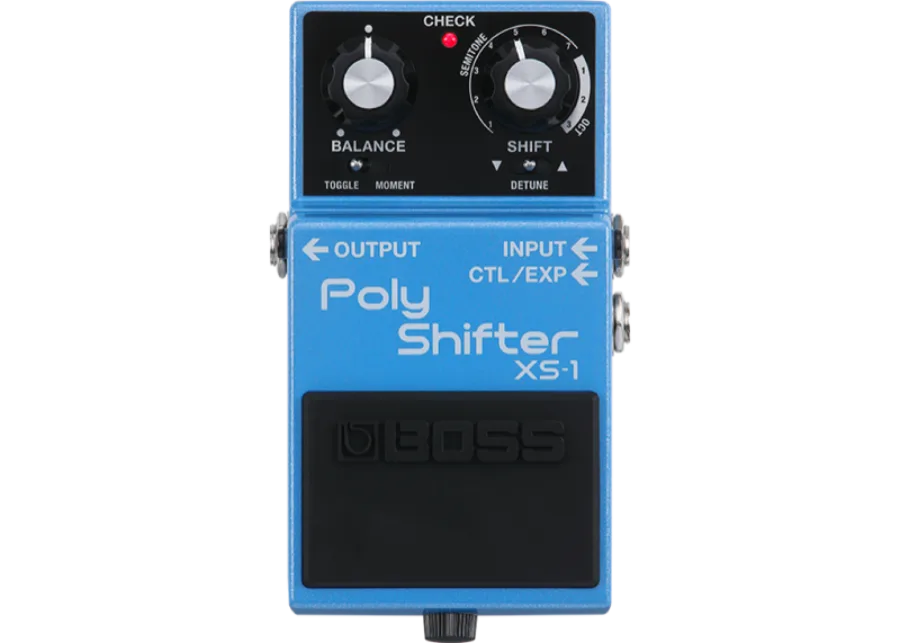
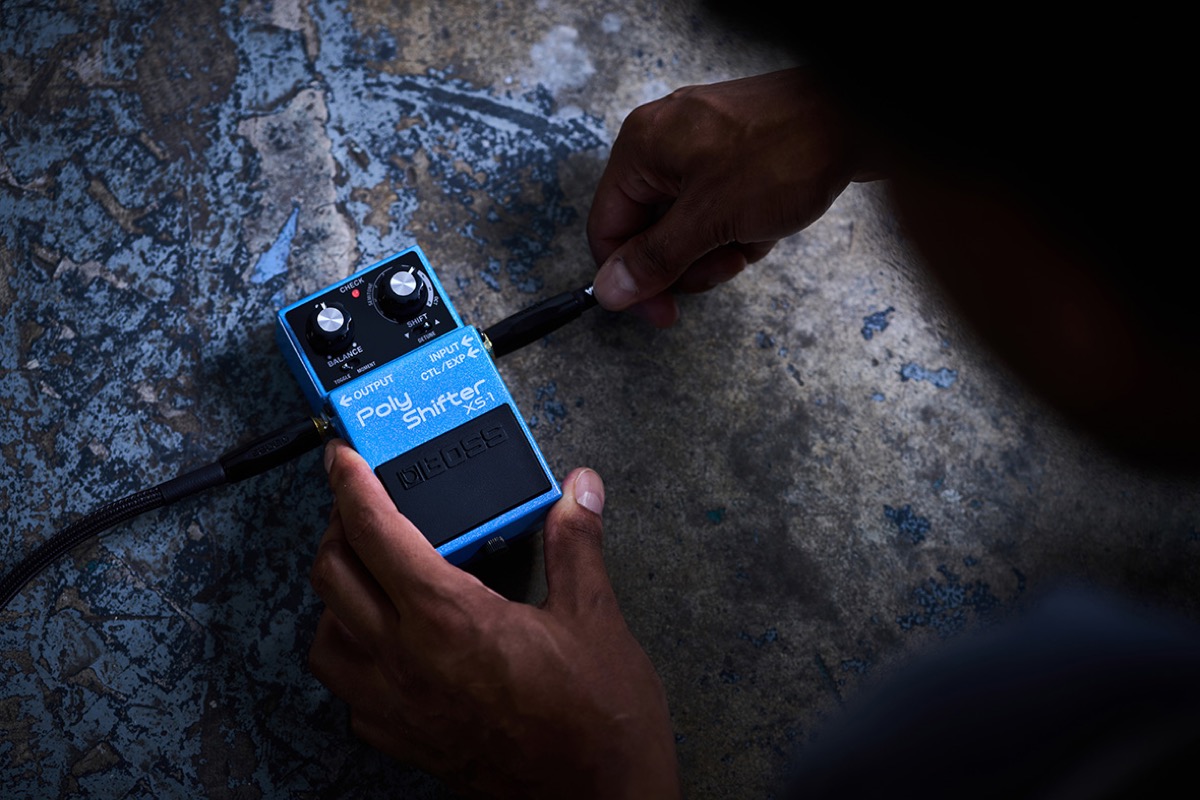
The Internet Has Thoughts About Premier Guitar's Boss XS-1 Poly Shifter Review.
Premier Guitar scored the pitch shifter 4.2 and the only complaint was missing a treadle. Owners found a different one the review never ran into.
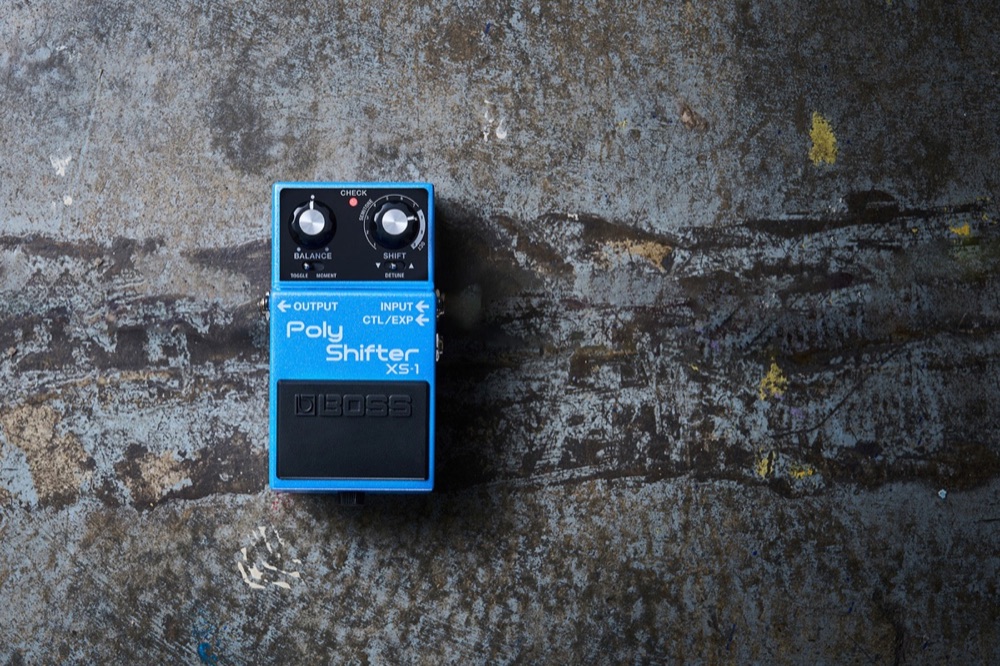
Two sides. One page.
Johnny argues the piece. Then he argues against himself. Somebody has to check his work. Read both, then call the winner below.
The take is shown below.
Source
“Any effect can color a guitar's personality and language. But Boss' new XS-1 Poly Shifter literally stretches the instrument's vocal range.”
What the internet actually said
“In person, with my own guitar, it's even more impressive.”
Long & McQuade · t.a.6.
“There is a noticeable clarity to the XS-1, that the Digitech Drop just does not have.”
VGuitar Forums · l.
“And why can't the dry guitar tone be eliminated from the output sound?”
VGuitar Forums · m.
The Suede Read
Premier Guitar scored the Boss XS-1 Poly Shifter 4.2 out of 5 and put its whole case in one sentence: any effect can colour a guitar's personality and language, but the XS-1 literally stretches the instrument's vocal range. For a $199 compact pedal that is a large claim, and Charles Saufley spends the review backing it.
The pros box is specific in the way useful reviews are. Smooth tracking for bends and glissandos. Rich octave-down sounds. Convincing bass, 12-string, baritone and capo sounds. Those are four distinct jobs, and naming them separately tells you the reviewer went looking for the failure modes that plague pitch shifting rather than strumming a chord and calling it tracked.
He also gives context most reviews skip. The XS-1 arrived alongside a bigger, more intricate sibling, the XS-100, and Saufley frames it as the accessible route into pitch shifting rather than the flagship. He is explicit that the pedal represents several leaps forward from first-generation shifters, which is a comparison across two decades of the format. And he tells you how to get the best from it: for the most convincing bass, baritone and 12-string tones, you will want a fully wet signal.
Hold onto that last line, because it becomes important.
The cons box is one line. The pedal lacks features like a treadle and MIDI capability that bigger pitch shifters provide. That is a fair note and also a soft one, since nobody buying a compact pedal at this price expects a treadle.
It is softer still than it first appears, because the review's own spec rundown notes an expression pedal jack for dynamic pitch control. So the treadle complaint is really that the treadle is not built in, not that sweepable pitch is unavailable. Plug in a pedal you probably already own and most of that con evaporates. Between the expression input, a shift range covering three octaves or seven semitones, and momentary or latching operation in a standard Boss enclosure, the feature list is not obviously short for the money.
Read the review end to end and you get a rave with an asterisk about absent features rather than about anything the pedal does wrong.
So to the owners, who mostly agree.
On Long & McQuade a five-star buyer says that in person, with his own guitar, it is even more impressive. He had already watched the demo videos, which matters: he arrived with expectations set by marketing and the pedal cleared them. On VGuitar Forums an owner who came over from a Digitech Drop reports a noticeable clarity to the XS-1 that the Drop does not have. That is a direct comparison from somebody who owned both units, and it independently confirms the tracking quality Premier Guitar measured. Two receipts, both supporting the review's central claim.
Then a third owner, on that same forum thread, asks a question the review never anticipated. Why can't the dry guitar tone be eliminated from the output sound?
Set that against Saufley's advice and the shape of the problem appears. He told readers to run a fully wet signal for the most convincing bass, baritone and 12-string voices. This owner is saying he cannot get there, that the dry guitar persists in the output, and he pairs it with a complaint that the interface is difficult to program. The review's recommended path to the pedal's best sounds is the exact path an owner reports he cannot follow.
That is not a tracking failure and it does not make the review wrong. Every measurable claim Premier Guitar made about tone survived contact with buyers, which is more than a lot of launch coverage manages. But there is a gap between how a pedal performs in a reviewer's hands over a week and how it behaves for somebody trying to dial in a specific voice months later, and that gap is where the wet-dry balance and the menu system live. A cons box that lists a missing treadle and stops has not prepared anyone for it.
Worth saying plainly: this is three owner comments. It is not a groundswell and we are not going to inflate it into one. The XS-1 is not being described as a bad pedal by anybody, including the person who cannot mute the dry signal.
Split. The tone quality holds up and two owners went out of their way to confirm it. What the review missed is not a sound, it is a workflow: the one setting it specifically recommends is the one an owner says he cannot reach.
Spotted something the press fluffed? info@suedeai.ai
The counter, argued by Johnny Suede
The press reviewed the pedal. The internet reviewed the ownership. Grading one against the other is the column's category error, not the magazine's.
The split verdict here penalizes Premier Guitar for a review that, by the post's own account, worked. The 4.2 score, the tracking praise, the honest one-line cons: owners on two continents then confirmed the tracking claim, one of them against a Digitech Drop he personally owned. The core promise of the review, this pedal tracks the way we say it tracks, survived contact with the customers. That is what a correct review looks like on the receipts.
The owner-found flaw the column holds against the magazine is a different genre of information. No reviewer, at any outlet, on any embargo clock, can simulate six months of ownership before writing launch coverage. The month-six discovery is what month six is for, and this column exists precisely because those two timelines produce different documents. Blaming the launch document for not being the month-six document is blaming the forecast for not being the weather.
The honest verdict had a name and the column flinched from it: press was right, with a postscript the press could not have written yet. Split implies the review missed something available to it. Nothing in the receipts shows that. What the receipts show is the column's own thesis working as designed, and a scoring system that cannot give the glossy a clean win even when the evidence does is a scoring system with a thumb on it.