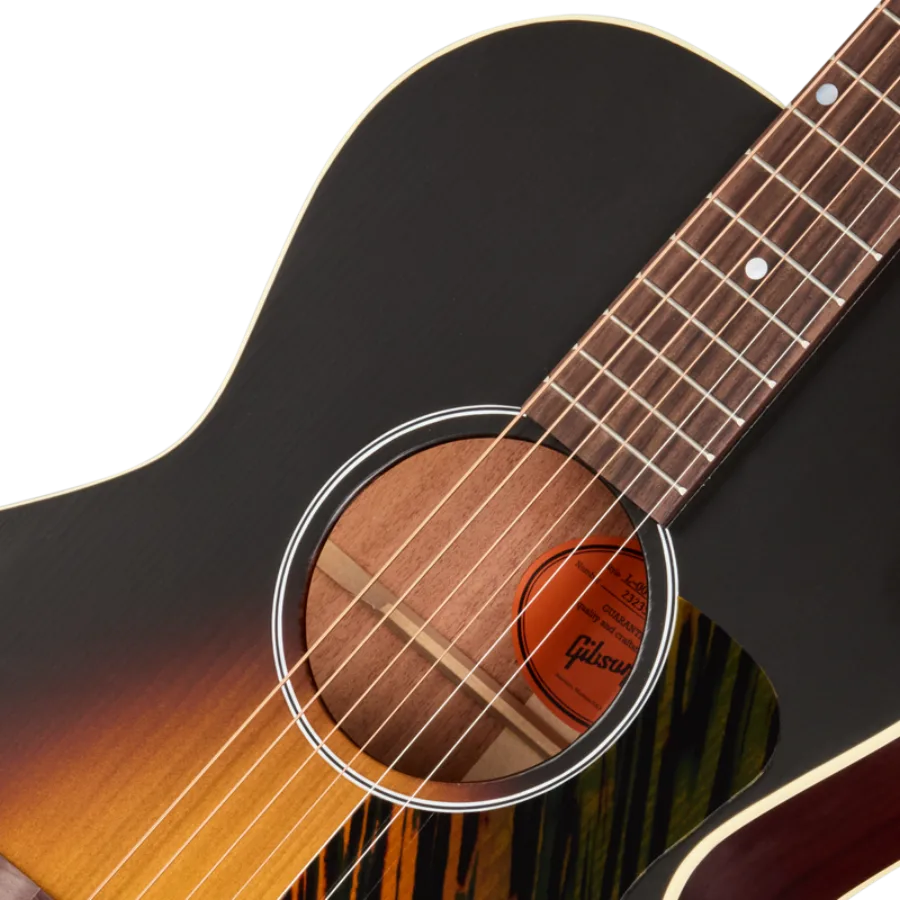
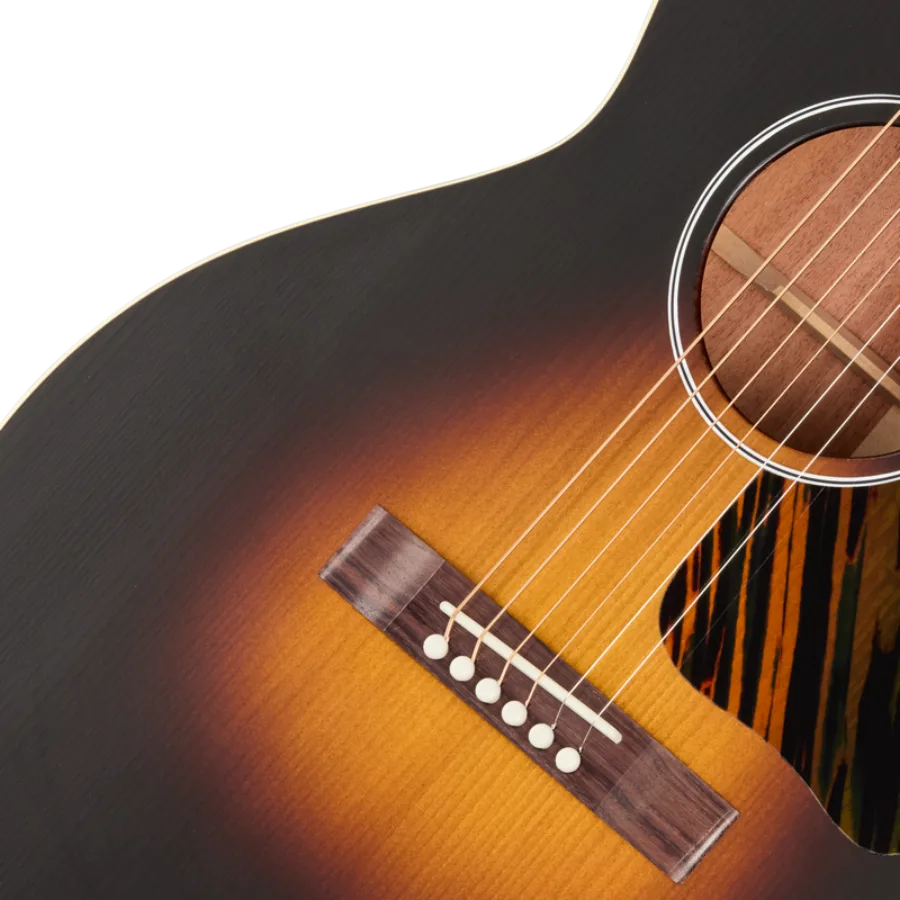
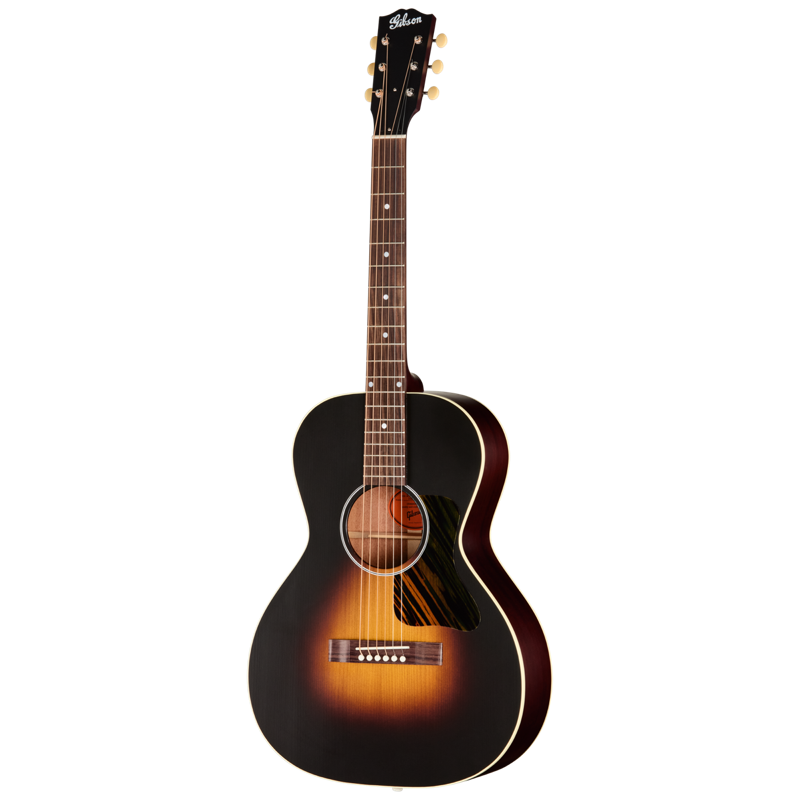
The Internet Has Thoughts About Two Magazines Disagreeing on the Gibson L-00 Century.
MusicRadar opened with "this is not a loud guitar." Premier Guitar, nine weeks later, had it snarling and popping under a flatpick. Same $2,299 guitar, same twelve frets.
Two sides. One page.
Johnny argues the piece. Then he argues against himself. Somebody has to check his work. Read both, then call the winner below.
The take is shown below.
Source
“A heavy touch with a flatpick yields lead tones that snarl and pop without blurring or sounding thin.”
What the other mastheads said
MusicRadar · 4/5 · Apr 28, 2026
“So I'll be upfront about one thing: this is not a loud guitar.”
The Suede Read
Two magazines reviewed the same Gibson L-00 Century 12-Fret nine weeks apart. One opens by telling you it is quiet. The other has it snarling.
MusicRadar got there first, on 28 April, at 4 out of 5. Daryl Robertson does something most reviewers will not do, which is lead with the limitation rather than bury it. I will be upfront about one thing, he writes: this is not a loud guitar. The rest of the review is warm and precise about what the instrument is for, blues and fingerstyle, mid-forward, intimate, and it steers away anyone shopping for room-filling volume. His two niggles are a black satin finish that gets greasy quickly and fret ends that could be better. That is a review doing its job with no ambiguity about who should walk past.
Premier Guitar arrived on 3 July at 4.4 and describes something else. A heavy touch with a flatpick, Charles Saufley reports, yields lead tones that snarl and pop without blurring or sounding thin. Elsewhere he writes that for a guitar of this size, it flat-out has a lot of horsepower. Snarl, pop and horsepower are not the vocabulary of a quiet parlour guitar.
Set those against Robertson's opening line and it looks like a straight contradiction about a $2,299 acoustic. It is not, quite, and the reconciliation is sitting inside Saufley's own sentence.
For a guitar of this size. He uses that qualifier twice, once about the horsepower and once about the headroom, which he calls impressive for a guitar of its size. Strip the qualifier away and you have a loud instrument. Leave it in and you have Robertson's. The two reviews are grading the same guitar against different reference points, and only one of them tells you so in the first paragraph.
Premier Guitar's cons box then confirms it outright. That box holds one line, and it is about value rather than voice: at this price, some players may desire the greater headroom a larger body delivers. Headroom is the honest word for the thing MusicRadar called volume. So Saufley found the same ceiling Robertson did. He filed it under what you are paying rather than under how it sounds, and put it at the end instead of the beginning.
MusicRadar's verdict carries the same concession, openly. It is not the loudest guitar in Gibson's lineup, Robertson writes, and it certainly does not have the depth or body of something like a J-45, but it has bags of character and plenty of charm. Both reviewers noticed that a compact 12-fret runs out of room before a dreadnought does. Both said so in print. What differs is where they said it, and that is not a small thing when it is the first sentence of one review and the last clause of another.
A second apparent disagreement dissolves on inspection, and the working is worth showing. MusicRadar files the finish under cons, complaining that the black satin gets greasy quickly. Premier Guitar files the finish under pros, calling it as handsome a satin finish as the reviewer has seen. That reads like another flat contradiction until you check which guitars they had in the room. MusicRadar's spec block lists Ebony as reviewed. Premier Guitar describes hand-sprayed nitrocellulose in vintage amber. Two colours, two finishes, no argument.
Nothing else on the two cons lists overlaps either. Premier Guitar's single reservation is the headroom. MusicRadar's two are the finish and the fret ends. Three reservations across two full reviews of one guitar, and not one of them appears on both lists.
The pros boxes are closer, though they are not offering a shopper the same thing. Premier Guitar's runs to five items, covering the voice, the finish, the neck, the low-end bloom the 12-fret construction produces and the build quality. MusicRadar's runs to three, and one of those is that the guitar arrives in a nice tweed case.
Which points at the last asymmetry. MusicRadar prints a full specification block: Sitka spruce top, solid mahogany back and sides, a 24.75-inch scale, a 1.725-inch bone nut, a body 4.25 inches deep, a weight of four pounds, three finish options and the case. Premier Guitar prints no spec list at all. At $2,299, only one of these reviews will tell you how deep the body is or what the guitar weighs before you order it.
There is no third account. Reverb's aggregate page for the L-00 Century 12-Fret states plainly that it has no reviews, and both of Thomann's colour listings show no text reviews either. This is a 2026 Century Collection release and nobody who bought one has written about it in public yet, so the mastheads are the entire record.
Split, and honestly a mild one. Neither review is wrong on the facts and neither oversells the guitar; both landed at four-ish out of five and both named a real drawback. But two reviews of one instrument should not leave a shopper with opposite first impressions of how loud it is, and the only reason they do is that one outlet led with the ceiling and the other mentioned it on the way out.
Spotted something the press fluffed? info@suedeai.ai
The counter, argued by Johnny Suede
Two reviewers described the same guitar accurately for two different readerships. The column has mistaken editorial emphasis for factual disagreement.
Nothing in these two reviews contradicts anything. A small-bodied 12-fret guitar can be quiet in absolute terms and still snarl under a flatpick. Those are claims about output level and about attack response, and they are simply different measurements. Any player who has put a pick to a parlour guitar knows both are true simultaneously. The post works this out in its own body, at length, and then keeps the split verdict anyway, which tells you the verdict came first.
The emphasis difference is also a service, not a failure. MusicRadar reviewed it for the buyer who might be about to make a mistake, so it front-loaded the limitation. Premier Guitar reviewed it for the player already drawn to compact 12-frets and led with what the guitar rewards. Those are two useful reviews of one instrument for two audiences, and a reader who checks both gets a better picture than either alone, which is an argument for the guitar press existing, printed inside a column that exists to doubt it.
And the scoring floor should matter: 4 out of 5 and 4.4. Neither outlet oversold this thing. Both named a real drawback. Both told you exactly who it suits. A split verdict is meant to record that the press got something half wrong; here the worst you can say is that two writers chose different first sentences. If that clears the bar for split, the bar is a formality and every post has one waiting for it.