
The Internet Has Thoughts About Premier Guitar's Revv Amps Dirtdog Review.
Premier Guitar scored it 4.6 and heard a very old, small amp at the edge of breakup. The one owner review on record reaches for the same amp, unprompted, at five stars.
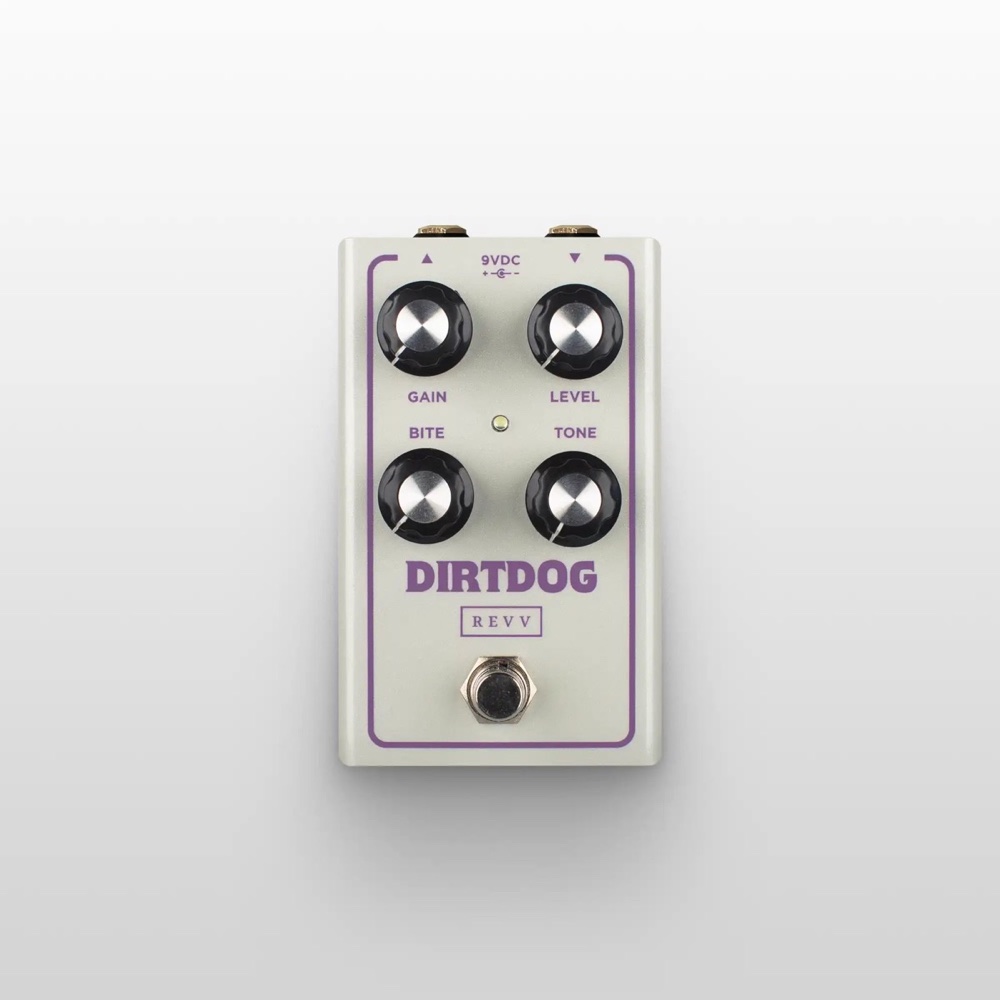
Two sides. One page.
Johnny argues the piece. Then he argues against himself. Somebody has to check his work. Read both, then call the winner below.
The take is shown below.
Source
“There is none of the cabinet rattle, blown speaker noise, or occasional smoking transformers that often also come with the real thing.”
What the internet actually said
“Very nice pedal, very wooly and definitely reminds me of a cranked Princeton.”
Sweetwater · m.n.
“I really enjoy this easy to dial in pedal from edge-of-breakup to thick, almost fuzzy old-school distortion.”
The Suede Read
Tom Beaujour scored the Revv Dirtdog 4.6 out of 5 at a street price of 199, and the subtitle does the selling. A late-1940s Fender tweed inspires a pedal that captures the essence of a small, raging amp, and more gain beyond that. The amp in question is named in the review: a late-1940s tweed Fender Princeton. Hold that, because it matters later.
The pros box is two sentences and they are unusually concrete for the format. The sounds of a small, vintage amp pushed to the brink are very authentic here. Available gain touches heavier zones. One claim about fidelity to a specific old amp, one about range past it, both checkable by ear.
The backstory is in the review rather than bolted on afterwards, and Beaujour keeps it short. When Canadian alt-country guitarist Joey Landreth was preparing to record the recent Bros. Landreth album Dog Ear, he purchased an amp kit and assembled a small combo inspired by a late-1940s tweed Fender Princeton. Three knobs came out the other end of that process, described as highly interactive controls for gain, level, and tone, the last of which adjusts the midrange voicing rather than rolling off treble.
Where the review earns its 4.6 is the top of the gain range, and this is the part the pros box compresses into four words. Higher gain settings range from fully bearded ZZ Top overdrive, Beaujour writes, before adding a parenthesis about Billy Gibbons getting hip to it, out to mega-distorted, doom-approved sludge that goes beyond most small amps' ceiling. Beyond most small amps' ceiling is the load-bearing clause. A tweed-in-a-box that only does tweed is a novelty. One that keeps going past what the source amp could physically do is a different product.
The line the review is remembered for is a comparison with ownership rather than with rivals. The joy, Beaujour writes, is that there is none of the cabinet rattle, blown speaker noise, or occasional smoking transformers that often also come with the real thing. Anybody who has tried to gig a 10-watt tweed original knows those are not rhetorical hazards.
He is also specific about what he heard and where. Plugged into a dead-clean Fender Princeton Reverb, he reports, the Dirtdog produces a range of tones that evoke the natural compression, slight sag, and rich harmonics of a very old, small amp at the edge of breakup, and beyond.
So the Princeton appears twice before any customer speaks. Once as the amp that inspired the pedal, once as the amp the pedal was tested through. Worth knowing whose word it is.
The cons box holds one line, and it is the kind of complaint that only comes from actually using a thing on a dark stage. Blinding white LED almost makes controls practically unreadable. Not a tone objection, not a spec objection. A pedal you cannot read once it is switched on, at $199, from a company whose amps are known for aggressive lighting.
Put the cons box next to the controls description and it sharpens. Three knobs that Beaujour calls highly interactive, meaning the setting of each one changes what the others do, sitting behind a light he says makes them practically unreadable. An interactive control set is the kind you adjust constantly. That is the one you most need to see.
Now the buyers, and there are not many of them writing in public. On Sweetwater one review calls it very wooly and says it definitely reminds him of a cranked Princeton. On Electric Mojo Guitars, a Canadian retailer listing it at $259 Canadian, the single review on the page is five stars and comes from somebody who arrived through the music rather than the spec sheet.
His reason for trying it is the Landreth record. After listening to the Dog ear album from The Bros. Landreth, he writes, he was curious about an amp-like pedal that feels like a small cranked combo, and his own parenthesis for that sound is a modded Princeton chasing Dumble-ish breakup. Then the verdict: I really enjoy this easy to dial in pedal from edge-of-breakup to thick, almost fuzzy old-school distortion.
That last sentence is the one that earns its place, because it independently covers both halves of the pros box. Edge-of-breakup is the small-vintage-amp claim. Almost fuzzy old-school distortion is the available gain touching heavier zones. A single owner confirming the exact two-part claim the magazine made is worth more than a chorus agreeing it sounds nice.
The Princeton, though, is a different kind of agreement. The word is in the review, in the product's own origin story, and in both buyer write-ups. Whether the pedal makes people think of a Princeton or people arrive already told to think of a Princeton is not something this record can settle.
Press was right. The two pros are specific, they are separable, and an owner who came to the pedal through a record rather than a press release confirmed both of them in one sentence. The cons box named a real annoyance nobody has disputed. A $199 box that behaves like a small tweed amp at the brink, and a light on the front you cannot see past.
Spotted something the press fluffed? info@suedeai.ai
The counter, argued by Johnny Suede
The review's frame, judged against the fragile amp it replaces, was Revv's marketing frame, adopted whole. Fourteen words from a Sweetwater review is a receipt the way a fortune cookie is a document.
The post admires Premier Guitar for measuring the Dirtdog against the actual experience of owning a fragile tweed original, no rattle, no blown speakers, no smoking transformers. Ask where that frame originated. It is the product's founding story, Joey Landreth's basement kit amp in a box, shipped in the press kit, adopted by the review, and inherited intact by this column. Three documents, one frame, zero independent framings. The receipts desk's whole reason for existing is to bring the second frame, and here it brought a mirror.
Now weigh the confirming receipts. Fourteen words from a Sweetwater buyer, wooly, cranked Princeton. A five-star from a retailer's own review section, edge-of-breakup to almost fuzzy. Both inside the honeymoon, both on storefronts whose review corpora skew structurally sunny, neither touching the questions a $199 amp-in-a-box actually lives or dies on at month three: noise floor in a real chain, stacking behavior, whether the wool turns to mud in a band mix. The column's founding essays call this exact class of receipt the weakest paper in gear. Sometimes the press is right, and sometimes the desk just agrees early and shops for confirmation in the sunniest aisle.
The sharper post was available and it is friendlier to everyone than this one: origin-story products, the kit amp, the basement, the artist's name, are the hardest coverage to audit because the story arrives pre-installed in every document, including the owner reviews, whose buyers purchased the story too. The Dirtdog may be exactly as good as everyone in this unanimous chorus says. The receipts that would prove it do not exist yet, and a column that knows the difference between a verdict and a chorus should have dated the verdict accordingly.