The Internet Has Thoughts About Guitar Player's Supro Airwave Review.
Guitar Player praised the serious 21st-century tech inside a simple tube combo. Its own connectivity line lists no effects loop, and the cons box never mentions one.
Two sides. One page.
Johnny argues the piece. Then he argues against himself. Somebody has to check his work. Read both, then call the winner below.
The take is shown below.
Source
“Versatility is greatly expanded by excellent-sounding Two Notes IRs.”
What the internet actually said
“They made a boxy 1×12 that sounds awful with all that tech and no effects loop for $1500.”
“It's cool. Not $1500 cool even with the dsp stuff and tube amp folks don't want to hook their computer up to their amp.”
“Awesome amp but at $1500.00 you think that it would have an effects loop.”
The Suede Read
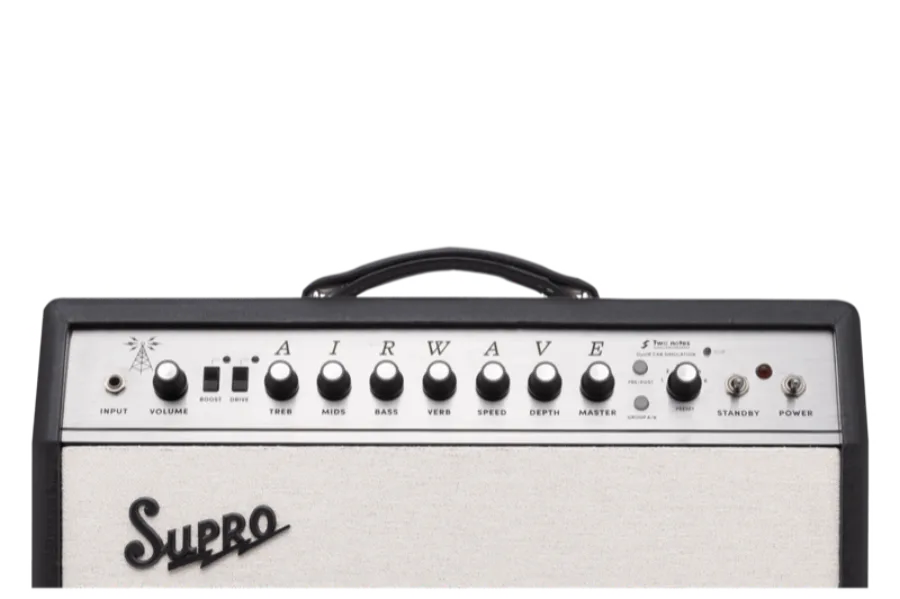
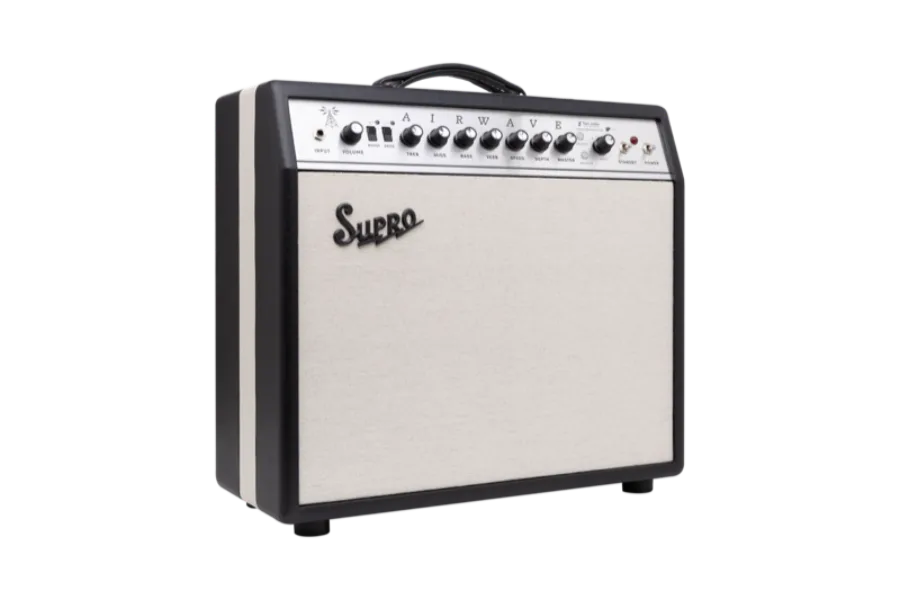
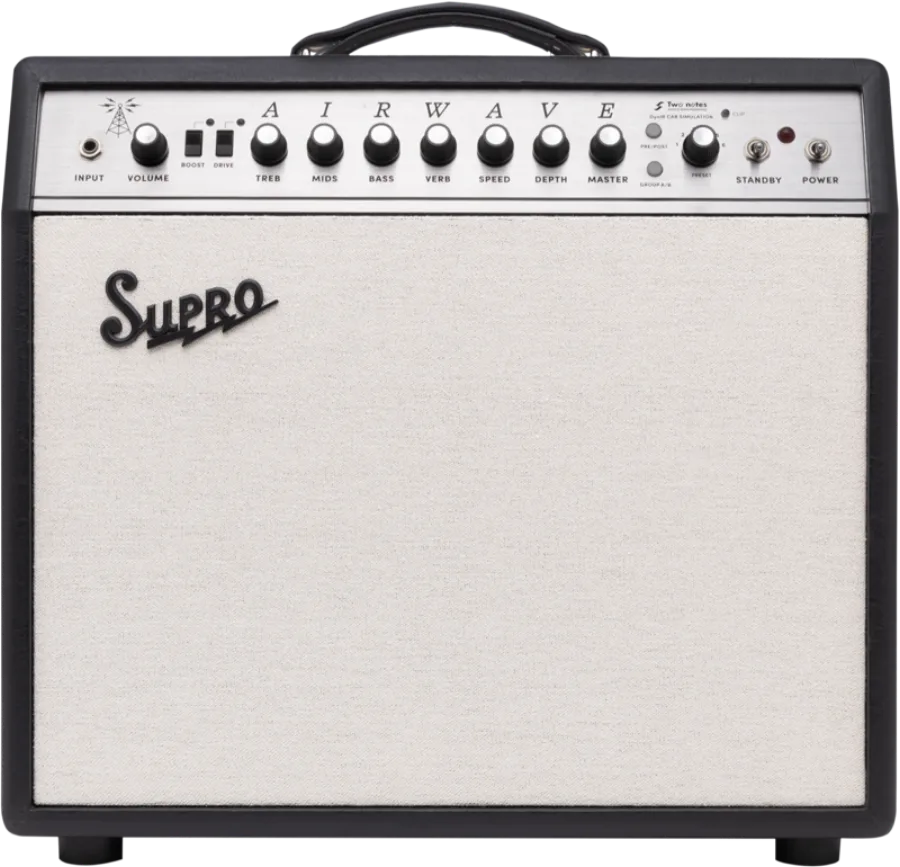
Guitar Player's headline for the Supro Airwave 1x12 sells a contradiction: a straightforward tube combo hiding serious 21st-century tech. Dave Hunter means it as praise and backs it up. Twenty-five watts, three 12AX7s and two 6V6GTs, a 12-inch Celestion BD12, spring reverb and tremolo, then onboard Two Notes DynIR processing with stereo XLR outs and software-editable presets. List price is $1,499.
Three entries fill the pros box, and their shape is the review's whole argument. The first says the Airwave is a good-sounding tube combo in its own right. The second says versatility is greatly expanded by excellent-sounding Two Notes IRs. The third says you can add third-party IRs on top. Tube amp first, computer second, open-ended third.
On the tube half, Hunter is specific about what he heard. With boost and drive switched off, the amp's clean and edge-of-breakup settings display that subtle marriage of grit and warmth. The digital half gets a count instead of an adjective: the 12 factory presets and six further downloads offer impressive variation in sounds and responses. Thirty-seven pounds, 20.5 by 18.5 by 9 inches, and the argument for all of it in one sentence. Although it's a relatively simple package, he writes, the Airwave provides everything you need to record direct to your DAW or run to front-of-house without a microphone.
Both entries in the cons box are about the reach of a feature rather than the quality of one. Although the tremolo sounds good its speed can be finicky to dial in. And a 2x12 and 4x12 cab preset would have been nice, which is a way of saying the cabinet simulation, the headline attraction, ships with a narrower spread of options than it might have.
A third limit sits in the body and never became a bullet. Boost and drive are handy bonus features, Hunter writes, but might be tricky to apply even with the foot switch, considering both are pre-set and the increase in output-level they induce can't be adjusted. Two footswitchable gain stages whose level you do not get to set. That is the same species of limit as the finicky tremolo and the missing big-cab presets. The feature is present. The control over it is not.
Which brings us to the connectivity line, printed in the review's own spec block. Cab Sim Level. A USB-C input. Left and right cab sim XLR outputs with a ground lift switch. A quarter-inch headphones jack. A verb and tremolo footswitch jack. A boost and drive footswitch jack. A speaker mute switch. An eight-ohm extension speaker output.
Read it again for what is not there. No send. No return. The phrase effects loop appears nowhere in the review, not in the pros, not in the cons, not in the body.
The review does supply an answer for ambience, and it is worth reading closely. While the factory presets are set pretty dry, Hunter writes, a significant amount of room or ambient reverb can be dialed in via the Torpedo Remote app. So space around the guitar is available. It arrives as software, applied to the cab sim after the tubes have finished, adjusted on a screen, and it never touches what comes out of the 12-inch Celestion in the room.
Under a demo video, three commenters arrived at that hole without anybody pointing them at it. They made a boxy 1×12 that sounds awful with all that tech and no effects loop for $1500, says the first. It's cool. Not $1500 cool even with the dsp stuff and tube amp folks don't want to hook their computer up to their amp, says the second. Awesome amp but at $1500.00 you think that it would have an effects loop, says the third.
Three comments is three comments, and the count matters. What lifts them above a shrug is that the review's own spec block confirms the thing they are describing, and the review then says nothing about it. The absence is not disputed by anyone. It is simply undiscussed by the only document in this story that had the amp on a bench and an obligation to report what is missing.
The consequence follows from Supro's own pitch. The case for $1,499 is that the Airwave does the whole job: gritty cleans and vintage-leaning drive in the room, and a finished signal straight to a desk or a DAW with no microphone in front of it. Every jack Supro added is downstream of the speaker. Stereo XLRs with a ground lift, a mute switch so the tubes can work with nothing coming out of the 12, a USB-C port for editing, an extension output. Nothing on that list sits between the preamp and the power section, so a delay or a reverb you already own has one place to go, and it is the front.
Split. The tremolo speed, the missing big-cab presets and the fixed boost levels are all in the review, two of them in a box where a shopper will find them. The fourth limit in the same family is legible on the review's own spec sheet and absent from its prose. Three people under a video found it in an afternoon. At $1,499 that gap is the difference between an amp that replaces a rig and one that has to sit next to it.
Spotted something the press fluffed? info@suedeai.ai
The counter, argued by Johnny Suede
Three YouTube commenters reading a spec sheet aloud is not the internet having thoughts, and the review's actual claim, the Two Notes integration sounds excellent, left the post uncontested.
Tally the counterweight this split verdict rests on: three commenters, independent of each other, asking where the effects loop is. An absent effects loop is not a discovery. It is on the spec sheet, visible from orbit, and, crucially, disclosed by the product itself before any reviewer touched it. Comment sections performing spec-sheet read-alouds are the shallowest stratum of gear discourse, below even the clip-verdict threads this column has learned to distrust elsewhere. Elevating them to the internet's rebuttal is the column meeting its format quota, not its evidentiary bar.
Meanwhile the review's load-bearing claim sailed through unexamined. Guitar Player said the baked-in Two Notes speaker simulation sounds excellent, which at $1,499 is the entire purchase thesis: a gigging tube combo that also feeds the desk a finished signal. Excellent-sounding is checkable against the owner record, against standalone Two Notes hardware, against the house engineer's ears. The post checked none of it. If the IRs are as good as claimed, the missing loop matters less, since time-based effects can ride the desk. If they are mediocre, the amp's whole pitch wobbles. The effects-loop chorus is downstream of the question the post never asked.
The honest scoring: press made one big checkable claim and one pricing bet, the internet contributed a spec-sheet observation the press never disputed, and no receipts were exchanged that touch the verdict. That is not split. That is unadjudicated, and a receipts column with a backlog should say so and come back when the month-three owner threads have opinions about the IRs, which is the only document in this story that will ever settle anything.