The Internet Has Thoughts About Guitar Player's Mesa/Boogie Mark VII Review.
Guitar Player filed silent recording among the Mark VII's pros. The instruction attached: unplug the speaker, and make sure it is fully unplugged. The headphone jack does not do it for you.
Two sides. One page.
Johnny argues the piece. Then he argues against himself. Somebody has to check his work. Read both, then call the winner below.
The take is shown below.
Source
“But when it's capable of pretty much any guitar tone you can think of, the price suddenly doesn't seem like such a huge barrier.”
What the internet actually said
“What I especially appreciate is the tone definition, and separation of played notes, in all channels, I have never heard anything like that.”
Thomann · r.
“Built-in load resistor for recording or headphones makes it ideal for my use.”
Thomann · r.
“I am very satisfied with the Mesa Boogie Mark VII 1x12 Combo. The sound is outstanding. It offers a variety of sounds.”
The Suede Read
Matt McCracken built the entire Mark VII verdict on range. He kept coming back to the Mesa despite having a couple of Fender and Orange tube amps at his disposal, used it for metal recordings and country guitar playing in the same stretch, and argued that when it's capable of pretty much any guitar tone you can think of, the price suddenly doesn't seem like such a huge barrier. Launch price is $3,849, £3,999 or €4,137.
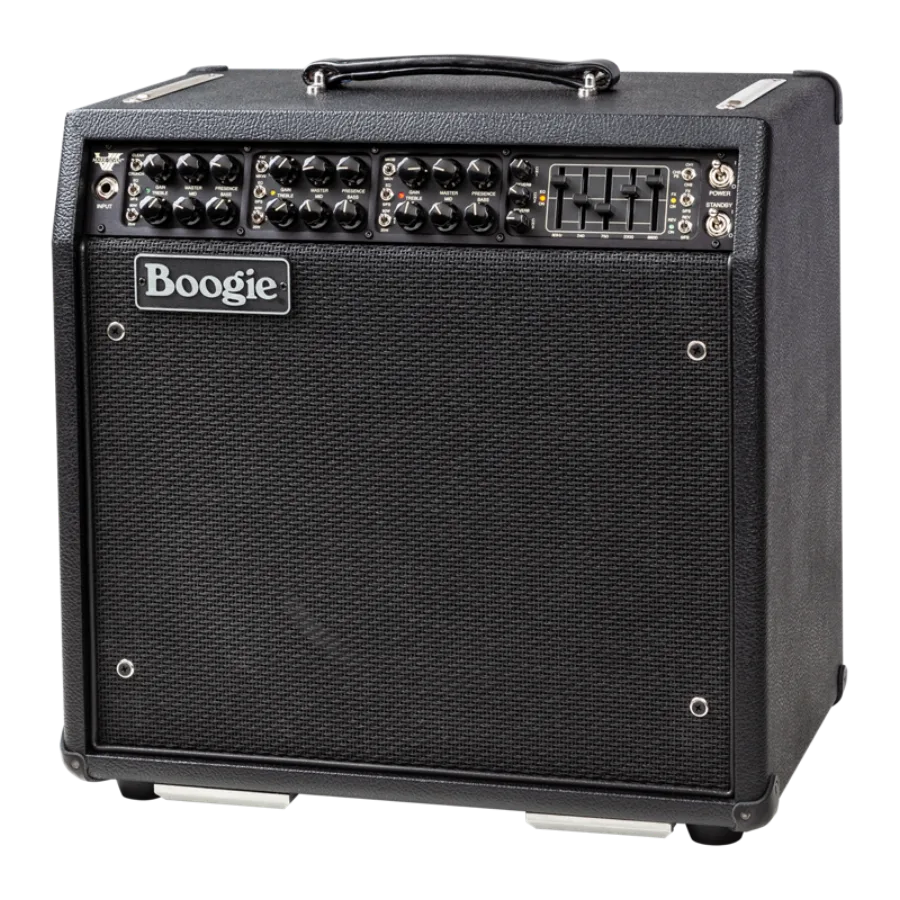
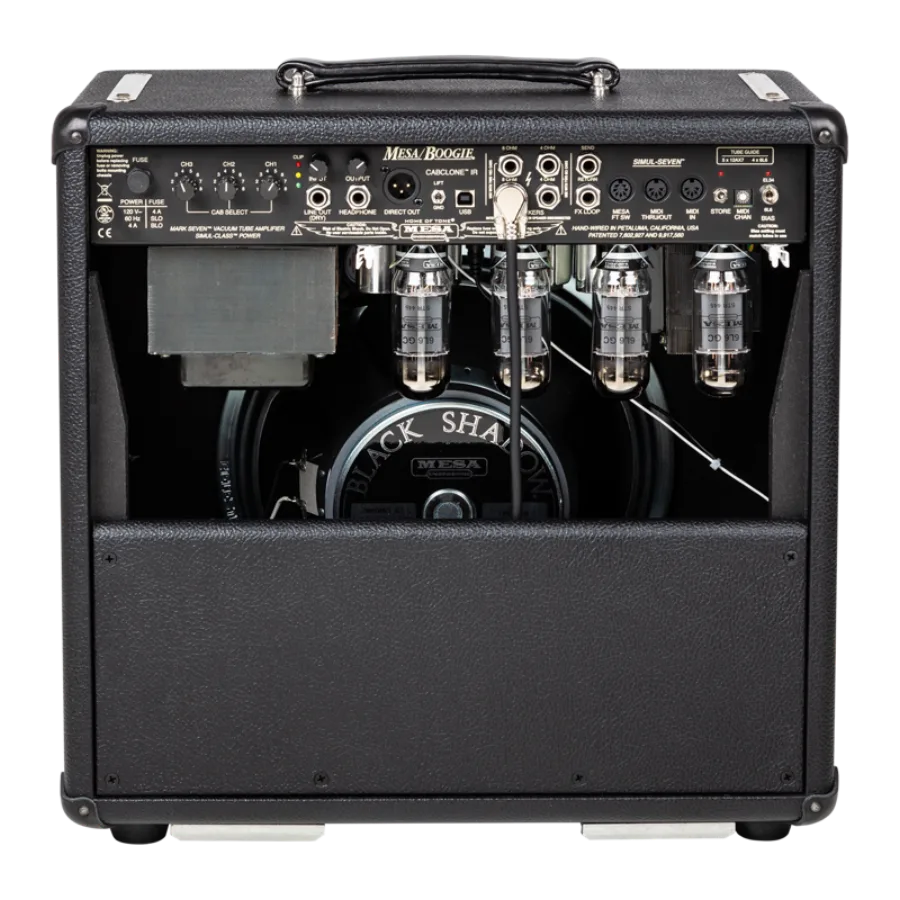
The spec sheet is that argument written as numbers. Three channels with extra modes stacked on top and a switchable graphic EQ. Ninety watts RMS, droppable to forty-five or twenty-five. Five 12AX7s feeding four 6L6s that will take EL84s instead. A Celestion Custom 90 in a 1x12 cabinet, built in the USA with a UK-made speaker. A tube-driven spring reverb, an XLR cabinet simulator, a USB port for loading impulse responses, an effects loop, and a six-button footswitch in the box rather than on the accessories page. Four entries in the pros box and every one of them is about breadth.
Those three channels are not three shades of one voice. Channel 1, based on the classic modded Fender amps, offers a clean, fat, and crunch operation. Channel 2 has fat, crunch, and MKVII modes for classic rock crunch. Channel 3 carries the rare MKIIB mode, the first of the Mesa amps with a buffered effects loop, plus the holy grail IIC+ mode and a MKIV option. Over the top of all of it sits a five-band graphic EQ McCracken calls very flexible, eight built-in cabinet IRs per channel with room to load your own over USB, and a footswitch he rates excellent, giving you complete control over every aspect of the front panel.
His tone notes run to both ends of that spread. On the clean side there's no boxiness at all, and it sounds incredibly full for what is a relatively small 1x12 combo amp. At the other end, moving to the high-gain channel, he is greeted by a searing tone that works perfectly with a drop-tuned baritone guitar. Modded Fender cleans and drop-tuned baritone gain out of one cabinet is the range claim demonstrated rather than asserted.
Two entries in the cons box, and only one is a fault. It's astoundingly heavy. And some will prefer a simpler amp, which is a warning about fit. McCracken doubles down on the first in the body: the only real downside I found with it is the weight, which is really quite excessive. The figure sitting under that sentence is 58 pounds, 26.3 kilograms, for a single-12 combo.
Then a line that never reached either box, attached to one of the four pros.
Silent recording is the feature that sells this amp to anybody with neighbours or a deadline, and the pros box lists it as a silent recording option for home and studio use. Here is the same feature described in the body: you can unplug the speaker here (make sure it's fully unplugged), and the amp automatically engages the built-in reactive load so that silent recording is possible. A parenthesis inside a feature description is a warning wearing a small hat. He returns to it later without the hat: just remember to unplug the speaker, as the headphone out doesn't defeat it automatically.
Read the pros bullet and you buy a switch. Read the body and you learn the silence is something you perform by hand, correctly, and that the headphone jack will not perform it for you.
The reverb, for its part, gets the kind of note that makes a review easier to trust. McCracken calls the built-in tube-driven spring reverb a really nice touch, says it is very similar to what you'd get on a vintage Fender amp, and adds that to his ear the tail was a little smoother sounding. Specific, comparative, and checkable by anyone who owns the Fender.
Thomann carries the only public owner writeups: two ratings, both at five stars, page average 5 out of 5 across the two.
The English one is from a buyer for whom the purchase was a long-held ambition, and what he singles out is resolution rather than volume or gain. What I especially appreciate is the tone definition, and separation of played notes, in all channels, I have never heard anything like that. All channels. That is the versatility claim restated from the paying side of the counter.
He also names the feature carrying the review's unlisted condition, and names it as the reason the amp suits him: built-in load resistor for recording or headphones makes it ideal for my use. Nothing in his review mentions unplugging anything. Whether he found the parenthesis himself or has yet to need it, his write-up does not say.
The German rating points the same direction in fewer words. Its author is very satisfied with the Mesa Boogie Mark VII 1x12 Combo, calls the sound outstanding, and says it offers a variety of sounds. Variety, again. Neither buyer raises the weight, which the review had already told them about.
Press was right. The claim under test was range, and the two buyers who paid $3,849 described range in the terms the magazine used, one of them down to the channel-by-channel note separation. The weight was disclosed and nobody argued with it. What the boxes buried is an instruction rather than a fault: unplug the speaker, and make sure it's fully unplugged. Get that right and the reactive load does the rest. Three channels, ninety watts, 58 pounds, and a parenthesis.
Spotted something the press fluffed? info@suedeai.ai
The counter, argued by Johnny Suede
Two reviews on a retailer page is not "the internet." Scoring the press right on that evidence is as lazy as scoring them wrong on it.
The column's standing boast is that it checks the glossies against the crowd. Here the crowd is two people, one of whom wrote in German, both of them on the page of the shop that sold them the amp and would like to sell more of them. Set aside whether they were sincere, and they almost certainly were: the sample is still too small to certify anything. A press-was-right verdict earned on that basis is not accountability journalism, it's a coin landing the way the magazine wanted.
Notice also what nobody tested. The review's actual load-bearing claim is comparative: that this amp beats the Fenders and Oranges already in the room, and that the breadth justifies four thousand dollars. Neither owner made a comparison at that price tier. One praised note separation, the other praised variety. Those are compliments, not audits. The expensive question, whether it is worth it against the alternatives, went unexamined by everyone including this post, which then graded the exam anyway.
The honest entry was no verdict at all. This column has a field for that: posts can run unscored, and the Fluff Index counts them as checked-but-unscored rather than folding them into a rate. Reaching for press-was-right because nothing contradicted the magazine mistakes an absence of evidence for evidence of absence, and it flatters the press for free. If the standard is receipts, then two receipts should buy two receipts' worth of certainty, which is to say almost none.