The Internet Has Thoughts About MusicRadar's Blackstar AirWire i58 Review.
MusicRadar's cons list said the casing feels brittle compared to the competition. An owner on his third set found out exactly how brittle, off a low bookshelf.
Two sides. One page.
Johnny argues the piece. Then he argues against himself. Somebody has to check his work. Read both, then call the winner below.
The take is shown below.
Source
“What I will say is the Cable Tone feature is too good to turn off”
What the internet actually said
“The sound is excellent and it may just be my imagination, but it's actually better than my cables”
Thomann · m.
“Knocked one off a low bookshelf and it hit the floor. Instant death. This is utterly unacceptable.”
Thomann · c.f.
“I've used this at a handful of rehearsals and gigs with no noticeable interference or signal degradation.”
Thomann · m.g.
The Suede Read
MusicRadar gave the Blackstar AirWire i58 four stars out of five and built the review around Cable Tone, the voicing feature that puts back what a real cable does to a signal. Too good to turn off, in the reviewer's words. Launch price was $169, or £149, or €159, which the review notes undercuts many of its competitors.
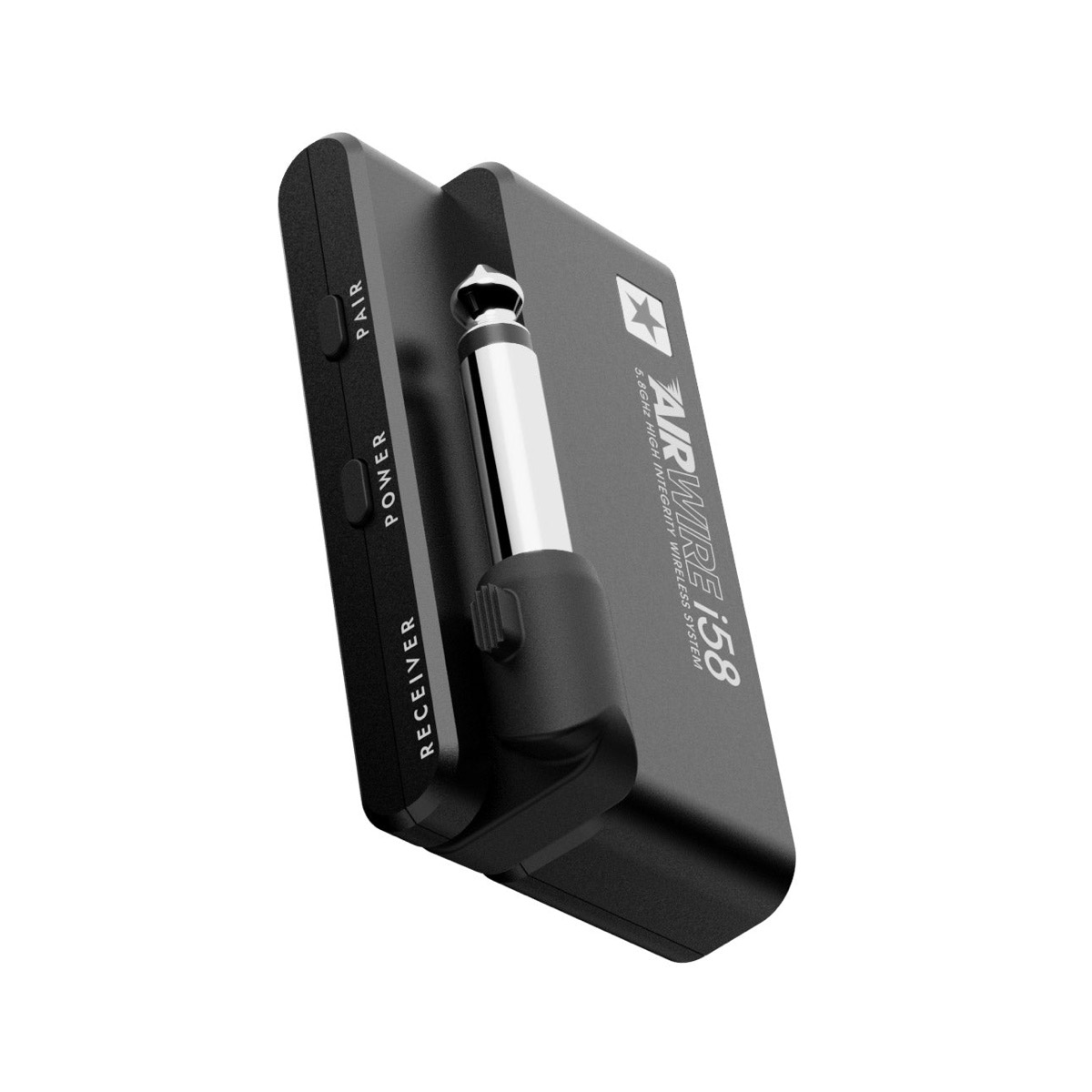
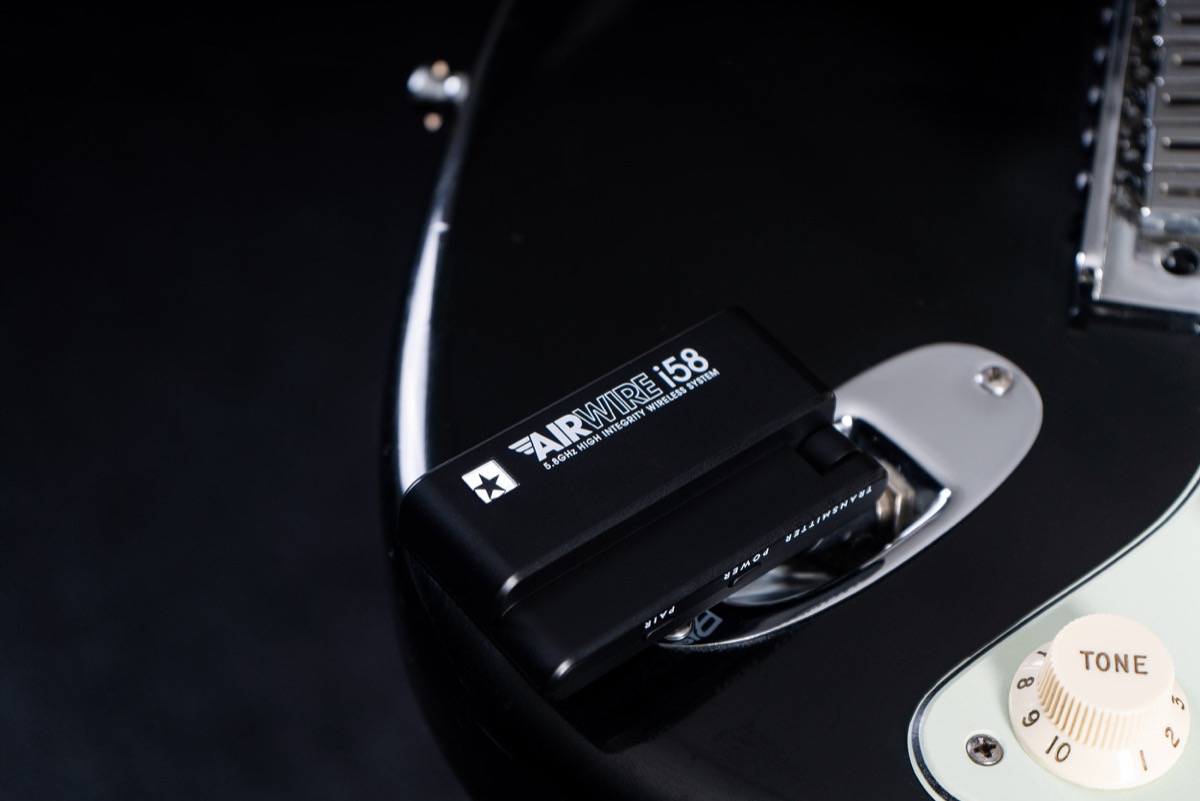
The spec is compact and legible: 5.8GHz, four channels, latency under 6ms, nine hours of playing from a two-and-a-half-hour USB-C charge, and a quoted range of 100 feet. Four pros, and they are the obvious four. Sleek. Tiny. Easy. Cable Tone is a godsend.
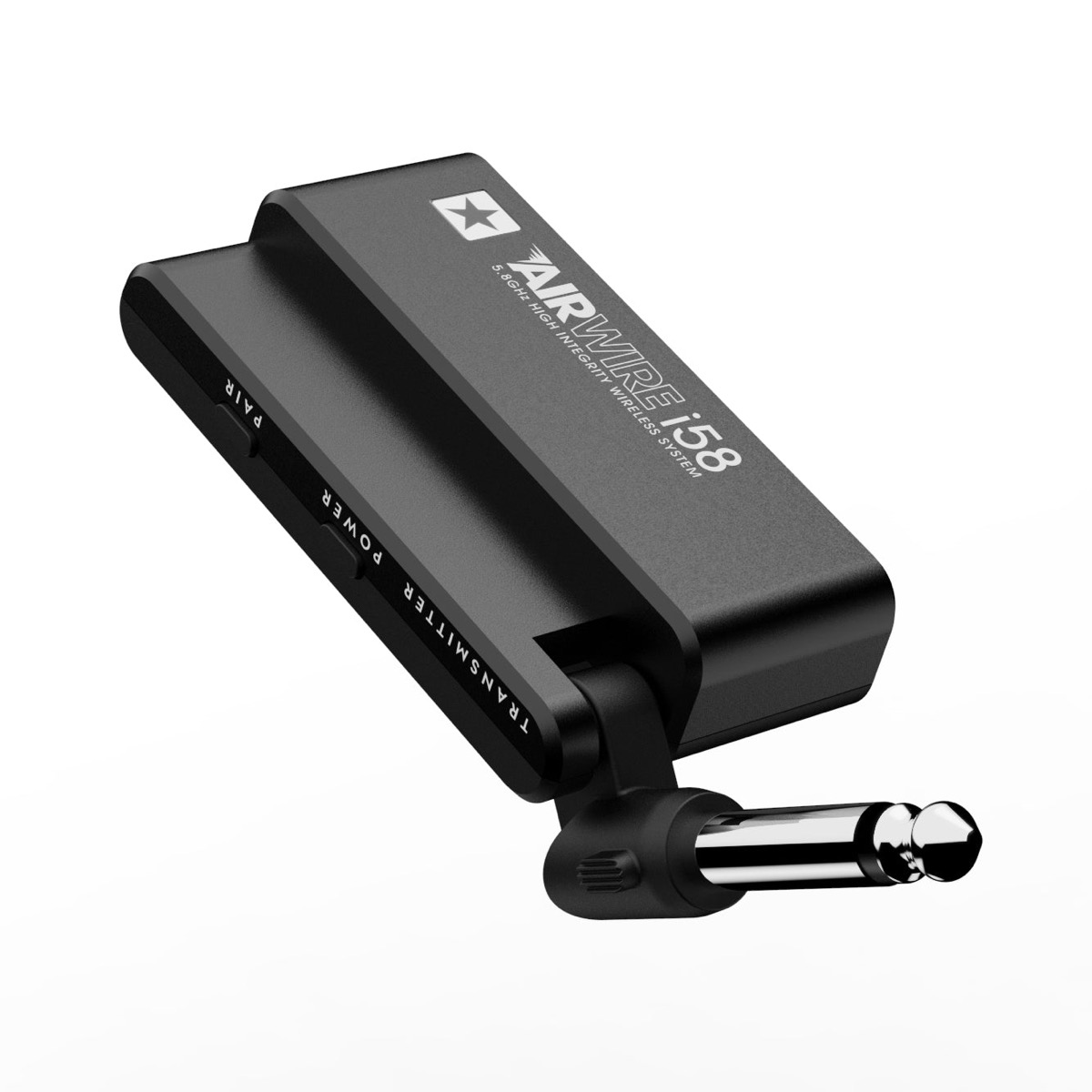
Then the cons box did the thing the guitar press is routinely accused of never doing. Three entries, and one of them is a build problem. Good luck telling the transmitter and receiver apart in a hurry. Signal is a little scratchy with Cable Tone turned off. Casing feels brittle compared to some of the competition.
Phil Weller does not leave that last one sitting in a bullet. The body escalates the same finding three separate ways. The plastic housing does not strike him as being quite as sturdy as some systems he has tried. The finish is quite susceptible to scratching. And plugged straight into a Quad Cortex, the receiver tended to fall to the ground rather than sit upright. That third observation is a part failing to stay in a socket, printed in a four-star review.
The Cable Tone finding is more interesting than a headline pull-quote can carry. With it engaged the signal becomes a little warmer and a little less scratchy; with it off, Weller says the signal tends to sound a little too digital for my liking. That is a wireless system whose default state, the one it ships doing, is the one he does not want to hear. Too good to turn off can be read two ways, and the review means the generous one. He also logs one unexpected screech of feedback that quickly subsided, and finds the colour difference between a channel light on and off a little unclear, which sits next to the cons box complaint about the two units being impossible to tell apart.
On Thomann the system averages 4.6 from 29 ratings with four written reviews, and the tone claim holds up in them. One owner says the sound is excellent and, imagination or not, it's actually better than my cables, and he names the cable brands it replaced. Another retired a Line 6 rig that had lasted fifteen years and reports no noticeable interference or signal degradation across a handful of rehearsals and gigs.
The dissent comes from an owner on his third set, and he is not a hostile witness. His earlier notes are about charging: a power strip's USB port did a poor job, the pedalboard USB ports worked well, and after a month of hours of daily use both sets were still performing like new. Then he added this. Knocked one off a low bookshelf and it hit the floor. Instant death. This is utterly unacceptable. No external damage at all. It would light up while accepting a charge and refuse to power on.
That is the brittle casing, from bookshelf height, on a unit with no mark on it.
The record does not stop there, and it would be dishonest to leave it where the story is best. He tried charging and powering the unit on again on an off-chance and it worked. He also admits to beating the heck out of it while trying to revive it, and says he may still buy a fourth set to use all four channels. So the failure was recoverable, and the customer who called it utterly unacceptable is still in the market for more of them. A fourth review on the same page calls the range huge and says the units handle high gain perfectly.
Which leaves the warning standing and the severity open. Blackstar shipped a wireless system in a housing the reviewer called brittle before any customer had dropped one, and the first customer to drop one watched it die on the spot. The prediction landed. Whether it lands on every unit is not something 29 ratings can settle.
One finding never made it into the cons box, and it is the largest number in the review. The spec sheet says 100 feet. Walking away from the receiver, Weller records a small dip in signal strength that grows with distance and, in his phrase, it works until it doesn't, conking out at around 50 feet. Half the printed figure, measured by the magazine itself, reported in the body while the summary bullets stay on the casing and the labels.
The verdict paragraph then raises another one the cons box missed: the lack of an active/passive switch, which the review says lets down an otherwise commendable spec sheet, especially for the price.
Press was right, and the credit is narrow and real. The flaw that broke for a customer was named first in print, in a cons list, on a product the magazine otherwise liked. Cable Tone works. The casing is what everyone said it was. The 100 feet is not 100 feet.
Spotted something the press fluffed? info@suedeai.ai
The counter, argued by Johnny Suede
Naming a flaw in a bullet point and then handing out four stars is not accountability. It is insurance, and this column just bought the policy.
A cons list is the cheapest possible form of honesty. Casing feels brittle compared to some of the competition costs the reviewer nothing, protects him entirely, and sits underneath a headline built around how good Cable Tone is. Meanwhile the customer's version of the same fact is that the unit died from a fall off a low bookshelf and he is on his third. Those are not the same disclosure at different volumes. One is a hedge; the other is a product that breaks. Scoring the press right here rewards a reviewer for having covered himself.
Notice also what four stars does to a durability problem. If the housing genuinely cannot survive a domestic knock, that is not a fourth-star deduction shared with two other niggles, it is the headline, because a wireless system lives on a stage floor and gets stood on. The review had the finding and buried it at the bottom in the same weight class as the transmitter and receiver looking alike. The column, which exists to catch exactly that kind of proportion failure, instead gave out a commendation for the footnote.
And the sample cuts against the story. Twenty-nine ratings, 4.6 average, one death that undid itself the moment its owner tried the charger again. Either the casing is a real and general fault, in which case four stars was too generous and this should be split at worst; or it is one unlucky unit that turned out not to be dead, in which case the receipts do not confirm the magazine's warning at all and the verdict rests on a coincidence. The post wants both readings at once: proof the press was right, and proof the flaw is real. It cannot have them from a single bookshelf and a unit still in service.