The Internet Has Thoughts About MusicRadar's DOD Badder Monkey Review.
MusicRadar called the $149 pedal a viable Klon substitute. The forum filed one objection and retracted it two posts later. The one that survived, a missing mixer out, appears in neither magazine.
Two sides. One page.
Johnny argues the piece. Then he argues against himself. Somebody has to check his work. Read both, then call the winner below.
The take is shown below.
Source
“what you're getting is a versatile workhorse that can be finely dialled in to cover a myriad of needs.”
What the internet actually said
“Looks like a cash grab. I haven't heard any clips yet.”
Seymour Duncan Forum · c.h.
“It's a bit of a shame they opted for one tone control, but still a neat redesign.”
Seymour Duncan Forum · f.p.
“The new one doesn't look like it has that [mixer out jack from the original].”
Seymour Duncan Forum · m.n.
What the other mastheads said
Premier Guitar · 4.6 · Jul 9, 2026
“This iteration is a genuine tone workstation, one that nudges you to keep chasing the perfect version of whatever sound you're after.”
The Suede Read
MusicRadar gave the DOD Badder Monkey four and a half stars out of five and put the claim straight in the headline: a bit of EQ tweaking with the Bad setting will get it sounding like a viable substitute for a Klon. The spec block prints the price as $149, £129, €149. What that buys, according to the verdict, is a versatile workhorse that can be finely dialled in to cover a myriad of needs.
The review is not lazy about earning it. Four pros, covering the size, the three drive circuits, the two-band EQ and the mounting options. One con, and it is a physical one: the central controls sit very close together. Trevor Curwen also puts a learning curve in the verdict itself, which is an honest thing to set beside a score that high.
Premier Guitar arrived two months later and landed almost on top of it. Joe Charupakorn scored the pedal 4.6 and called it a genuine tone workstation, one that nudges you to keep chasing the perfect version of whatever sound you are after. His single con is that the obscure control names can be confusing. Two mastheads, two months apart, and both of their complaints are about the front panel.
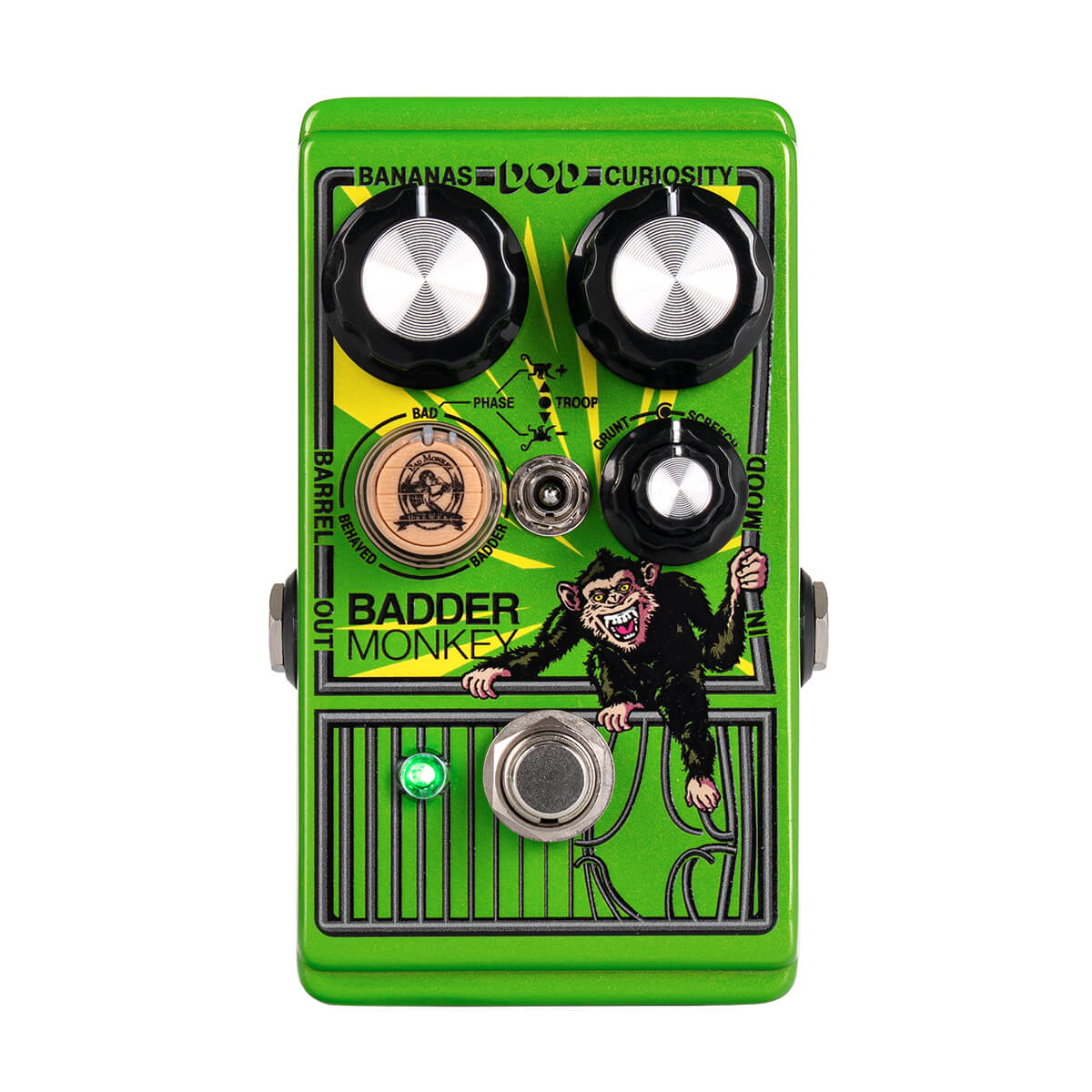
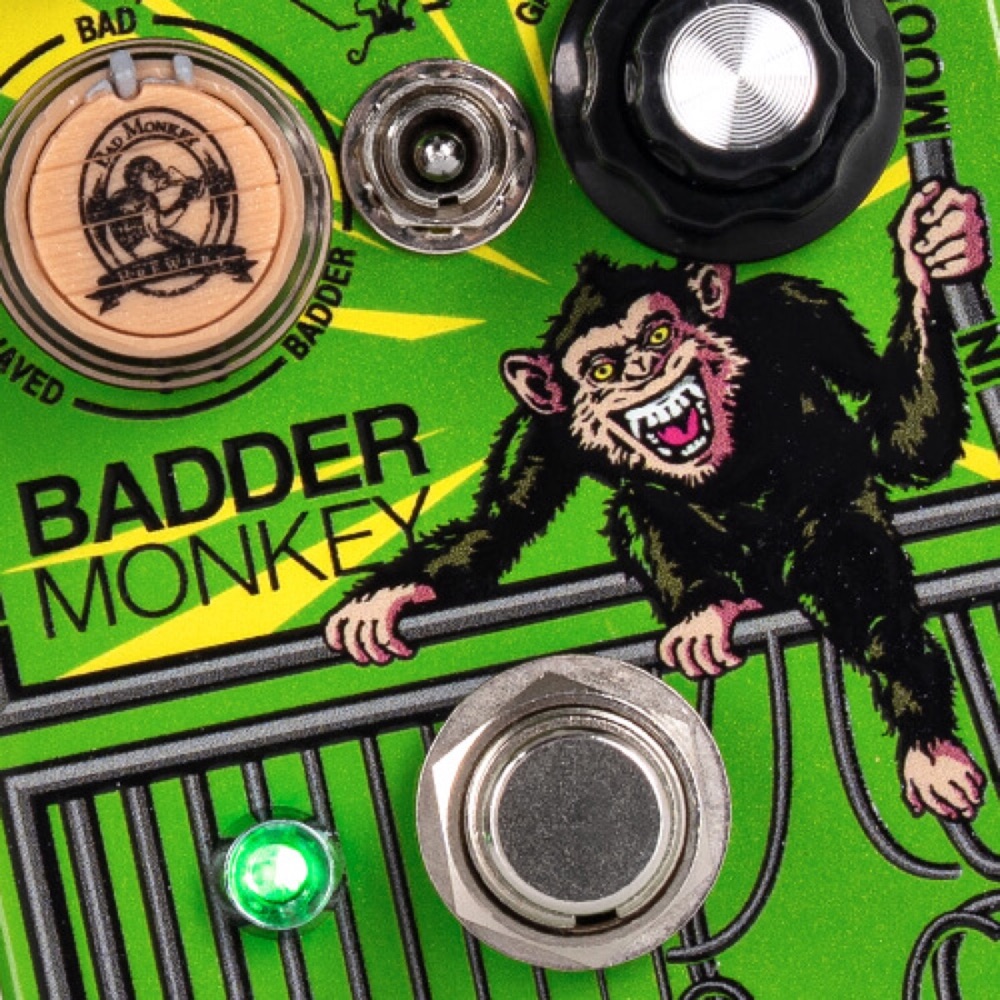
The panel invites it. Gain is bananas, level is curiosity, blend is barrel, and the tone stack is a dual-concentric knob whose two halves are grunt and screech. Premier Guitar supplies the numbers underneath the names: grunt gives 22dB of boost or cut centred at 100 Hz, screech gives 12dB centred just above 3 kHz. The blend knob has three detents, behaved, bad and badder, selecting or mixing three independent parallel overdrive circuits.
Charupakorn then ran the test a reissue deserves. He set the bad circuit against his own Bad Monkey, the cheap 2004 DigiTech that was discontinued in 2016 and reborn as a holy grail in 2023, and reported the two practically identical. That is the central question of any reissue settled on a bench, by somebody who owned the original.
The Seymour Duncan Forum got there earlier and got there colder. The thread opens before anyone has heard a note of it: looks like a cash grab, a member writes, I haven't heard any clips yet. Six posts and four members later it has produced two specific objections about the pedal itself.
The first one dies where it was born. A member argues that what made the original so versatile was its separate Low and High EQ controls, and says it is a bit of a shame they opted for one tone control. Two posts down, another member corrects him. There is a concentric treble and bass control here. The objection is withdrawn on the spot, and the member who filed it signs off calling the thing a superb redesign instead. Both magazines back the correction: MusicRadar lists the two-band EQ among its pros, and Premier Guitar prints the centre frequency of each half.
The second objection is still standing. The original Bad Monkey had a mixer out, a second output the same member describes as essentially a low-pass filter, and he says that output going to the amp sounded great. The new one, from the clips and the photos, does not look to him like it has one.
Search Premier Guitar's page for mixer, for second output, for low-pass, and nothing comes back. MusicRadar's spec block walks through the controls, the true bypass and a reversible StagePlate without reaching the sockets, and no mention of an extra output appears in its pros, its cons or its verdict. Neither review says the jack was dropped. Neither says it was kept.
Money is not the argument either. A third member on the same thread notes the price is pretty much on par with any new basic pedal from Boss, JHS, or the like, which is roughly where both magazines land when they call $149 fair for three circuits in one box.
Be precise about how thin this record is. A short thread, one objection retracted by the person who filed it, and the surviving one is a member working from clips and photographs rather than from a teardown. It is an observation, not a measurement.
It is also the only thing on the record that neither magazine looked at. Tone got tested twice and held both times. The interface got flagged twice, from two directions. A reissue quietly losing an output that was part of why guitarists kept the original is the one question that went to press unasked, and the forum raised it in post two.
Split. The Klon line holds up, the circuits do what both magazines say they do, and the thread spent more of its energy correcting itself than correcting anybody else. But Charupakorn had a 2004 Bad Monkey sitting on the bench beside the new one. He compared the circuits. Nobody compared the backs.
Spotted something the press fluffed? info@suedeai.ai
The counter, argued by Johnny Suede
Cash grab, posted before a single clip existed, is the exact vibes-before-receipts move this masthead bans, and the column printed it as the internet's opening argument. The Klon claim was checkable. Nobody checked.
The post's structure gives the forum the first word, and the first word was filed before evidence existed. A cash grab, posted prior to any public audio, is not a thought the internet had about the Badder Monkey. It is a reflex the internet has about legacy brands reviving old names, deployable against any product, informative about none. This column's entire constitutional premise is that claims get checked against receipts. It opened with a claim that predates the possibility of receipts and framed it as the counterweight to a magazine that at least played through the pedal.
Meanwhile the actual checkable claim sat there unchecked. MusicRadar said the Badder Monkey, with the right EQ settings, can sub for a Klon. That is a hundred-and-forty-nine-dollar pedal being measured against the most mythologized circuit in the industry, and this masthead employs the tools to settle it: the house Klon historian, a kit-built clone on staff, a level-matched A/B protocol documented in its own pages. The audit was one afternoon of work. The post ran the vibe against the claim and called the standoff a split.
The DOD story underneath is better than either document. A budget brand's klone claim going mainstream in the glossies is the final stage of the Klon myth collapsing into commodity, which this magazine has been chronicling for years. The right post held the review's claim to the bench test, printed the result either way, and used the cash-grab reflex as its own exhibit: how brand nostalgia and brand cynicism are the same uninformative coin, flipped. Instead the coin got printed mid-air, and the verdict is the sound of it never landing.