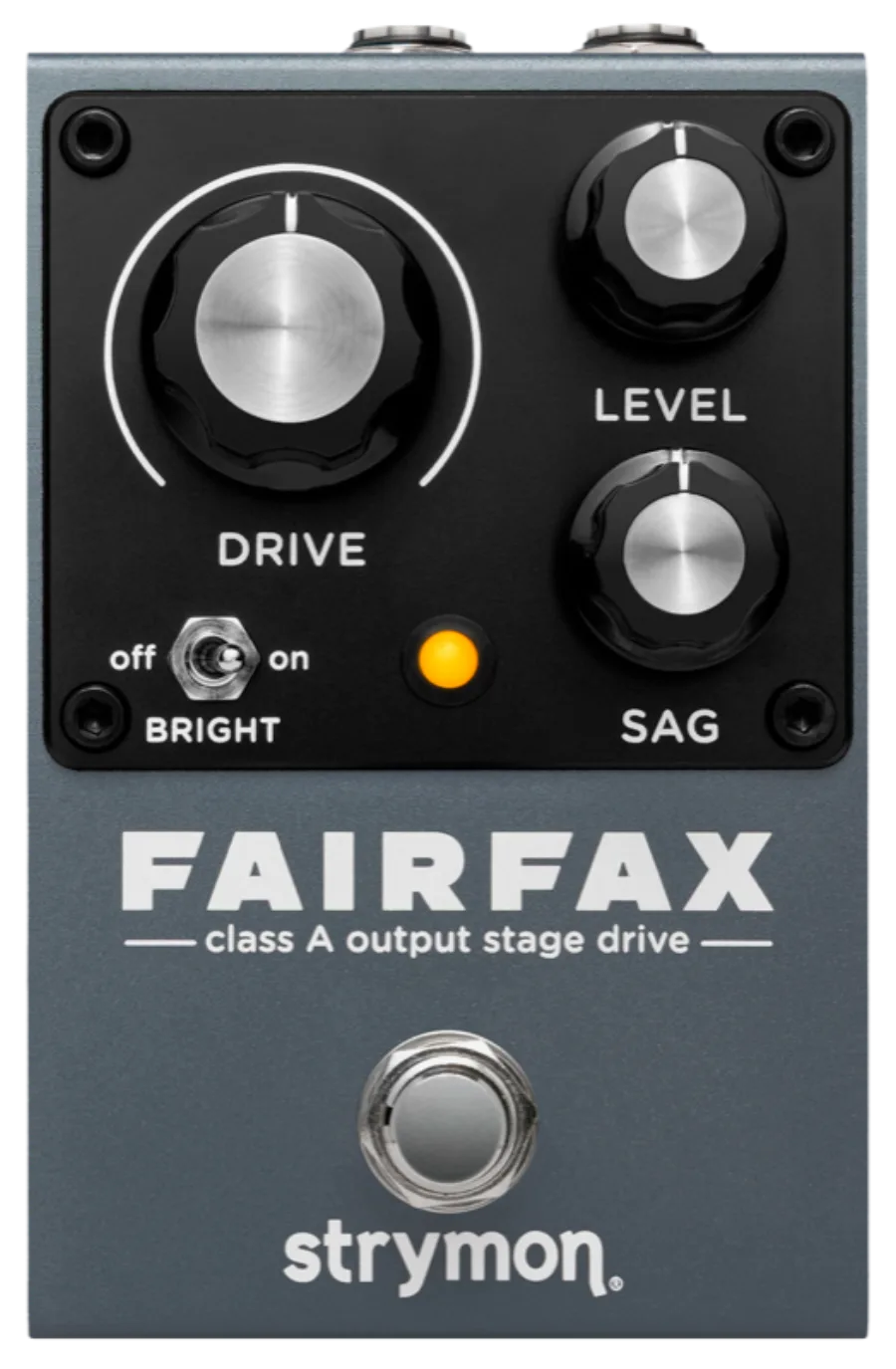
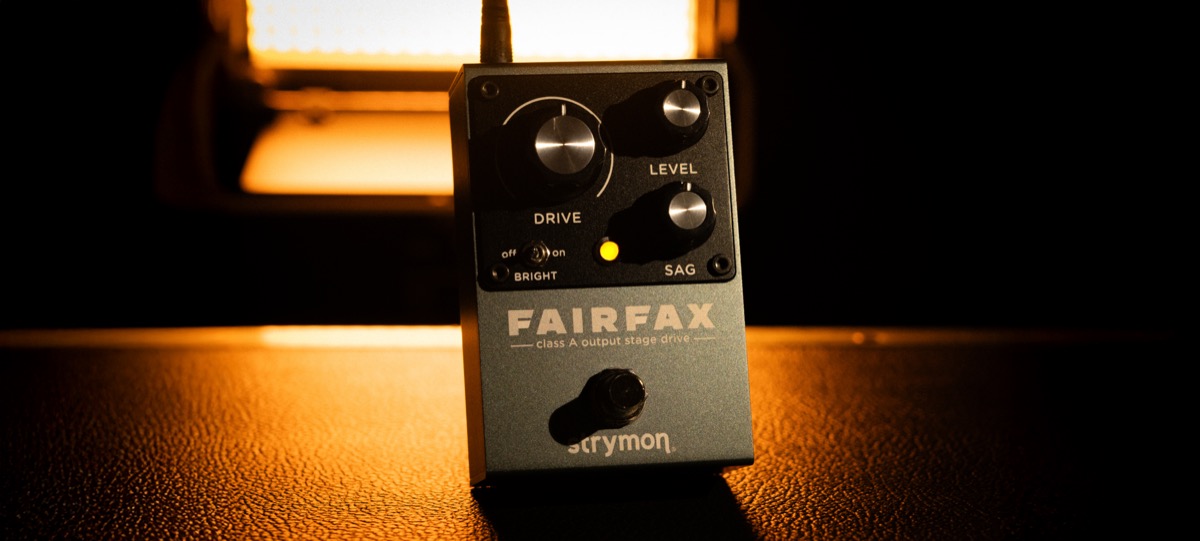
The Internet Has Thoughts About What Premier Guitar Filed as a Con for the Strymon Fairfax.
In the field where a magazine prints the reason you might not buy something, Premier Guitar printed a punchline. Two rival outlets used theirs to name a missing knob.
Two sides. One page.
Johnny argues the piece. Then he argues against himself. Somebody has to check his work. Read both, then call the winner below.
The take is shown below.
Source
“I think it can do it all.”
What the other mastheads said
MusicRadar · 4.5/5 · Jan 14, 2026
“It is worth noting that things can get a little frayed around the edges if you push the gain too far.”
Guitar.com · 9/10 · May 4, 2026
“Maybe some players will wish it had a tone control”
The Suede Read
Premier Guitar scored the $199 Strymon Fairfax 4.9 out of 5, the highest mark any outlet gave it. In the cons box, where a magazine prints the reason you might not buy the thing, James Volpe Rotondi printed this:
High levels of sag can make precision players sound like they kinda suck—but in an absolutely awesome way!
That is the entire cons field. It is a compliment with a punchline standing in the space reserved for a warning, on the highest-scoring review of the pedal anywhere. There is genuine information inside it, that heavy sag smears your timing, and a reader who already knows what sag does will extract it. A reader deciding whether to spend $199 will read a joke and move on.
Rotondi's pros field is not the problem. It is a single sentence, vivid and specific, promising overdrive from subtle to searing and a sag control that runs from classic rock solo secrets to utter cacophony. Nor is the review evasive elsewhere. He raises the case against the pedal himself, noting that some have called the Fairfax a character pedal rather than a go-to overdrive covering all your bases, and then rejects it outright. I think it can do it all.
Hold that sentence, because it is the one claim in the review two other outlets went on to test.
MusicRadar went first, on 14 January, at 4.5 out of 5. Daryl Robertson's cons ran to two lines and both are actionable: the drive can get a little fuzzy around the edges, and extra tone shaping controls would be handy. He then makes the second point twice more. In the body he says he found himself wishing for a touch more tone shaping, and adds that this is not the most versatile drive out there, with anyone after surgical EQ control likely to look elsewhere. The verdict says it a third time, conceding that more options on board for tone sculpting would be preferable.
One gap, stated three times, in three separate parts of a single review. That is a writer making sure nobody skims past it. His other body caveat is just as concrete: things can get a little frayed around the edges if you push the gain too far. That is a reviewer telling you where the pedal stops behaving.
Guitar.com came in on 4 May at 9 out of 10, higher than MusicRadar and nearly level with Premier Guitar. Richard Purvis was unambiguous about liking it, calling the pedal awesome, smartly designed, unexpectedly versatile and bubbling over with musical character. His pros box runs to four items, covering the organic tones across gain levels, the sag control, the pedalboard-friendly build and how the thing behaves running straight into a cab sim. His cons box holds one line: maybe some players will wish it had a tone control.
Purvis also prints the underlying fact, which neither of the other two reviews states plainly. There is no tone control on the Fairfax, just a toggle switch for bright mode. Premier Guitar mentions that same switch, describing it as adding sparkle to an essentially scooped-midrange, valve-style saturation, and leaves it there. One outlet treats the switch as a feature. Another treats what it stands in for as a question worth putting to a shopper.
So two independent outlets, four months apart, arrived at the same specific gap in the same pedal, one from the sound and one from the control layout. That is corroboration, and it is the most useful thing in this entire set of reviews. Anyone reading either would know to check whether they can live without a tone control. Anyone reading only Premier Guitar would not know the question existed.
The three reviews then split on the exact claim Rotondi volunteered. Unexpectedly versatile, says Guitar.com. Not the most versatile drive out there, says MusicRadar. I think it can do it all, says the 4.9. Two of the three back him, which is a real answer to a real question, and it is available only to somebody who reads all three and tallies them up.
A note on Guitar.com's headline, which says plenty of rough edges and scans like a pan. It is not one. It describes the pedal's old-school voice, and the body calls the thing awesome outright.
As for owners, there is one. Reverb lists a single five-star review of the Fairfax Class A, posted on 23 January, from a buyer who calls it an absolute tone machine. One line from one customer cannot convict or acquit anybody, and it is not treated here as though it could.
Split, and narrowly. Nobody has shown the Fairfax underdelivers, two of three reviews did their job properly, and the pedal is probably as good as all three say. The failure is one cons box on the highest score, in the one place a shopper looks for a reason to hesitate.
Spotted something the press fluffed? info@suedeai.ai
The counter, argued by Johnny Suede
Three independent reviewers reached the same conclusion about a pedal nobody has criticised, and the column has convicted the one who was funny about it.
Look at what survives here. Two outlets identified the same limitation with no contact between them. The third wrote a rave. One customer paid money and called it a tone machine. Not a single voice anywhere, press or public, says the Fairfax disappoints. On that record the honest finding is that the guitar press covered a good pedal accurately and one writer made a joke, and a scoreboard that turns this into a mark against the press is a scoreboard looking for work.
The cons box charge is a complaint about register, not about information. Rotondi's line tells you exactly what high sag does to your playing: it smears precision. The column concedes the information is in there and then penalises him for the delivery, which is a demand that every reviewer write in the same flat voice. Readers follow that voice because it is not flat. Rewrite it as "con: high sag reduces note definition" and the same fact would have passed without comment.
And note the standard being applied. Guitar.com's single cons line is treated as diligence. Premier Guitar's single cons line is treated as dereliction. Both outlets printed one reservation. The difference is that one of them was dry and the other was not, and dryness is now the scoring criterion.
The narrow verdict is at least honest about its own thinness, which the previous version of this entry was not. But narrow is doing a lot of work. Strip the register complaint out and what remains is a $199 pedal that three outlets and one owner agree is very good, filed on an accountability ledger as a failure of the guitar press.