The Internet Has Thoughts About MusicRadar's Gretsch Electromatic CVT Double-Cut Review.
MusicRadar called it budget firepower for garage and punk. One forum poster called the specs horrible, and an owner called it an SG killer.
Two sides. One page.
Jason argues the piece. Johnny argues against it. Read both, then call the winner below.
The take is shown below.
Source
“It's a fun, affordable electric that offers dual-humbucker tones at an affordable price point.”
What the internet actually said
“This guitar plays itself. Great fretwork, easy tension.”
Gretsch-Talk · t.s.
“Seems like horrible specs for an electromatic. No G locks, pickups from the cheapest guitar in the line, and a bolt on neck.”
Gretsch-Talk · g.b.
“outside of the crappy pots(that are essentially either dialed up or off)and junky pot metal bridge(although I will add it works fine and does NOT rattle)”
Gretsch-Talk · t.s.
The Suede Read
MusicRadar gave the revived Corvette shape four stars out of five and closed on value: retro looks combined with modern playability, a lot of punch sonically, and just as much when it comes to value. The price is £499, or €549, or $414.
The shape has form. Gretsch first introduced the Corvette in 1961 and its popularity has fluctuated ever since; the 2025 revival brings it back revised with dual humbuckers, wearing the CVT name, as the affordable Electromatic take. Stuart Williams books three pros against two cons. Cool styling on a budget, solid humbucker tones across rock sub-genres, a no-fuss design; and against those, a factory setup that needed a tweak, and a guitar that is not the most versatile in the world. For £499 that is a proportionate ledger.
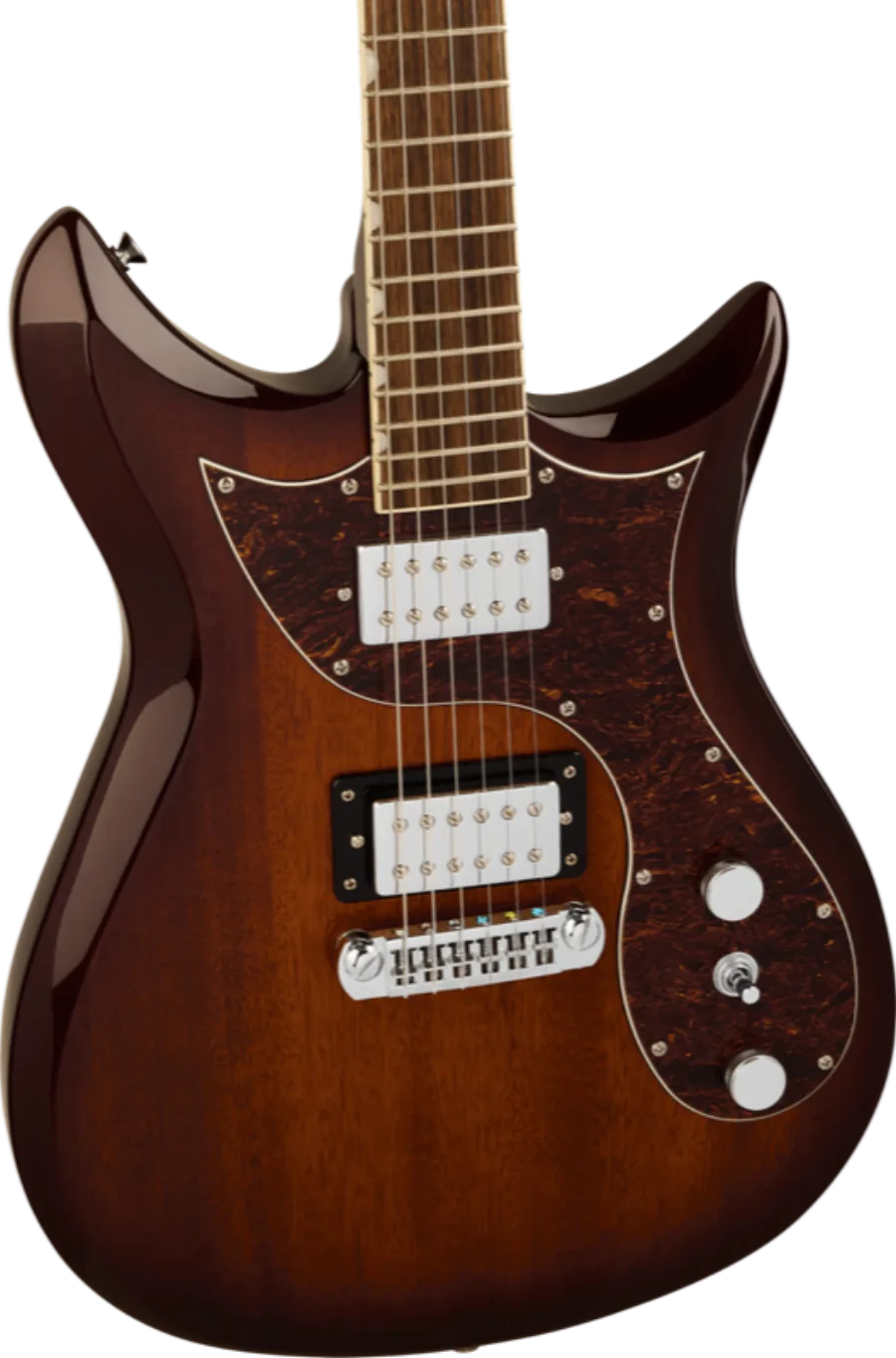
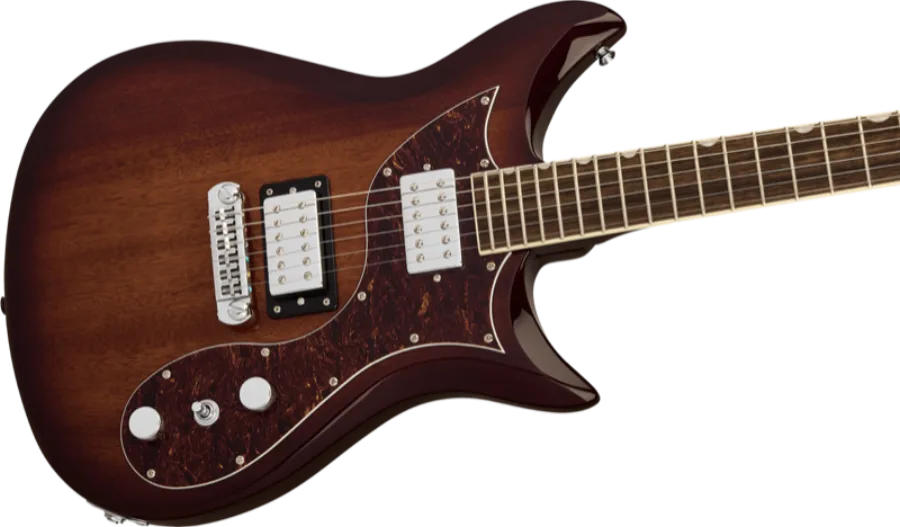
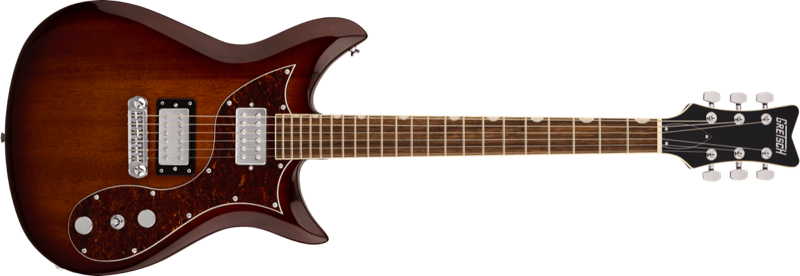
Worth having the specifics behind the tone claim. Two Twin Six humbuckers with Alnico 5 magnets, which Gretsch markets as gut-punching power with remarkable balance and articulation. The review only half-endorses its own manufacturer copy: the gut-punch part especially, Williams says, is a fair description. Under crunch the note separation holds and it does a great job of semi-clean indie rhythm parts. Mahogany body, 24.6-inch scale, a modern 12-inch fingerboard radius rather than the vintage 7.25 inches of the Jack Antonoff signature, wraparound bridge with intonation adjustment, made in China, three finishes.
The looks get their own paragraph and it is the warmest writing in the piece. The Wychwood 'burst transitions smoothly from black at the edge to what Williams calls the swampy green main event, and the other two finishes are Vintage White and Havana Burst. Die-cast sealed tuners. Nickel hardware. The 24.6-inch scale is described as pretty much the same as many vintage Gibsons, which tells you where this thing sits under the hand even before the humbuckers speak.
The setup complaint is earned by measurement rather than by feel. Out of the box the action sat around 2.35mm on the bass side and 2mm on the treble at the twelfth fret, and half a turn of the truss rod, accessed at the headstock, put it right. Printed numbers, printed fix.
Two more reservations never reach either box. The review calls it a shame that the scale length is 24.6 inches and warns that baritone territory would need a more specialised setup. And the control set, a master volume, a master tone and a three-way switch, comes with a blunt caveat: anyone who is forever grabbing at the controls to govern how a guitar interacts with a valve amp should look elsewhere.
Then the sentence that outruns the whole review. Williams finds a shallow hairline crack in the finish around the heel. He is careful about it, saying he had to look pretty carefully to find it and that it appears to sit in the clear top coat rather than through the paint job. And then he adds that this is something that is becoming a common complaint on review guitars at this price. That is a reviewer indicting an entire price bracket in a subordinate clause, on the record, and scoring the guitar four stars anyway.
The spec sheet took fire on Gretsch-Talk before anyone had played one. Seems like horrible specs for an electromatic, wrote one member: no G locks, pickups from the cheapest guitar in the line, and a bolt on neck. On paper that argument is not crazy. Bolt-on necks and borrowed pickups are precisely where a company saves money, and Electromatic is a badge that has historically implied a little more.
An owner report lands in the same forum and the paper case gets complicated. This guitar plays itself, he writes. Great fretwork, easy tension. Seven pounds, well balanced, no neck dive. He can burn the thing down and it stays perfectly in tune even right after a string change. His two-word verdict is SG killer.
He also goes further than MusicRadar did on where the money did not go. The whole package feels like a real bargain, he says, outside of the crappy pots(that are essentially either dialed up or off)and junky pot metal bridge(although I will add it works fine and does NOT rattle). Nobody made him add that last part.
Line the three documents up and they describe the same guitar from three distances. The forum's spec critic priced the bill of materials and found it thin. The review played it, found a setup issue, a finish flaw and a narrow but convincing voice, and put a number on all three. The owner played it for weeks and found the wood, the neck and the frets had the money while the pots and the bridge did not.
That is what an honest budget guitar looks like, and four stars is the score the hardware supports. Not five.
Press was right. The tone claim holds at both altitudes. The cost-cutting is real and it is printed. And the one flaw the forum never saw, that crack in the top coat, the magazine found and published itself.
Spotted something the press fluffed? info@suedeai.ai
The counter, argued by Johnny Suede
The forum's spec argument was the substantive one, and one happy owner is not a rebuttal. The column's own rules demand month-six threads, not honeymoon receipts.
The Gretsch-Talk poster the column breezes past made a checkable, material claim: this Electromatic ships with pickups borrowed from the cheapest line in the catalog and a bolt-on neck, at a price where the badge implies more. That is exactly the kind of spec-sheet-versus-street-price analysis this magazine performs approvingly when its own writers do it. On paper, that argument is not crazy, the post concedes, and then declines to engage it, because an owner called the guitar an SG killer and the vibe was good.
One owner. The column's founding methodology, printed and reprinted upstairs, is that individual honeymoon receipts are the least reliable document in gear, that month-three threads are where truth lives, that the silent middle never posts. The press-was-right verdict here rests on the review plus a single enthusiastic buyer inside the return window, which is a sample the house's own rules would laugh out of any post where the verdict ran the other way.
The likely truth is boring and available: MusicRadar reviewed the guitar as a fun, affordable garage machine and was right at that altitude, while the forum audited the bill of materials and was right at that altitude, and the two altitudes never meet because fun and componentry are different products. A desk that exists to hold two documents side by side had both in hand and filed only the friendlier one under the verdict.