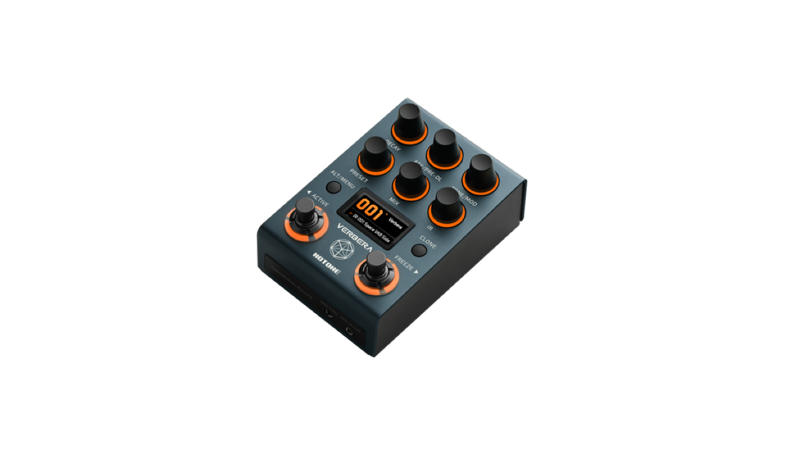
The Internet Has Thoughts About MusicRadar's Five Stars for the Hotone NC-200.
MusicRadar gave it five out of five. Its own body text says the sounds are impressive when you get the settings just right, a condition that never reached the cons box.
Two sides. One page.
Jason argues the piece. Johnny argues against it. Read both, then call the winner below.
The take is shown below.
Source
“A stunningly good reverb pedal that sounds and operates like one twice the price.”
What the internet actually said
“I opened a support ticket. There is no confirmation email that it arrived, and otherwise, nothing. The mail fell into a black hole.”
“I cannot use a device like this without support. So despite very good sound, a bad rating.”
“The price. No, this is taking the mickey, it really is massively expensive.”
The Suede Read
MusicRadar gave the Hotone NC-200 Verbera five out of five on 12 June. A stunningly good reverb pedal, the headline says, that sounds and operates like one twice the price. Launch price was $299, or £249.
Five out of five leaves no room above it. So it is worth reading what the body of that review actually says, because the body is less certain than the score.
Daryl Robertson clearly likes the pedal, and the review is not thin. He explains the architecture, a dual-engine design with one side capturing the nuanced reflections of real spaces through IR convolution, and his pros run to three: superb sounds, very easy to use, and the Clone and Freeze features as genuinely good extras. He is also specific about who should not buy it, which is the mark of a reviewer doing the job rather than writing a press release. If you are after a basic reverb for a tight spring or a general sense of ambience, he says, this is not the pedal for you.
Then, describing what the thing sounds like, he writes that the way it mixes realistic room sounds from the IRs with the wild, modulated tones of the algorithmic verbs is honestly impressive when you get the settings just right.
When you get the settings just right.
That clause is doing a lot of work and it never reached the cons box, and it never touched the score. A five-star rating tells a shopper the pedal delivers. A conditional in the middle of the review tells them it delivers once they have solved it. Both statements are in the same piece, and only one of them made it into the summary anybody skims.
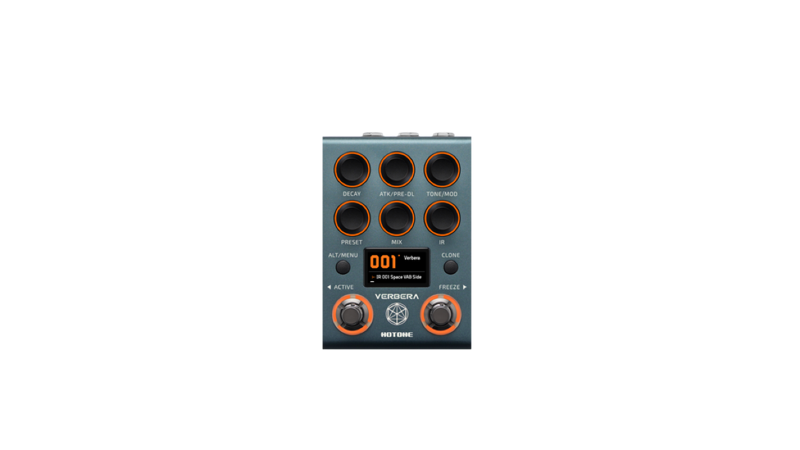
Look at the control set and the conditional starts to look load-bearing rather than throwaway. Decay, attack and pre-delay, tone and modulation, preset, mix, IR select, an ALT menu key, Clone, Active and Freeze. That is eleven functions on a compact enclosure, several of them doubled up behind a menu. Very easy to use is one of the review's three pros, and it may well be true relative to rival convolution boxes, but easy to use and rewards getting the settings just right are pulling in slightly different directions inside the same five-star verdict.
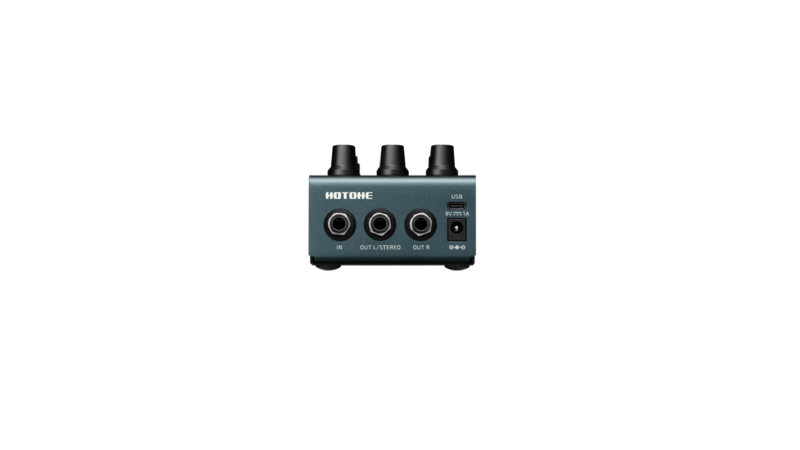
The cons box, to its credit, is not empty. It holds the MIDI ports and the spring settings. Robertson calls the port placement weird there, and in the body he escalates the same point: the downright bizarre positioning of the MIDI Thru and MIDI IN/EXP jacks. Those are two 3.5mm mini jacks sharing space with an expression input, so there is a real cramped-panel story behind the complaint. Twice-stated build criticism in a five-star review is worth acknowledging rather than glossing.
Now Thomann, where four buyers have written the pedal up, three in German and one in French. Not one of them argues with the sound. The two we are not quoting are broadly positive, and the first of them spends his review on impulse-response flexibility and stereo capability, which is the review's own territory and supports it.
The substantial dissent comes from one German owner, and the shape of his verdict is the whole point. He wanted the new firmware. Getting it meant the Neon Collector app, which crashed while connecting the pedal over USB. He opened a support ticket, received no confirmation that it had even arrived, and then nothing: the mail, in his words, fell into a black hole. His conclusion is that he cannot use a device like this without support, so despite very good sound, a bad rating.
Read that construction again. He concedes the review's entire claim, that the sound is very good, and marks the product down anyway on a different axis. That concession is what makes the receipt hard to wave away. He is not somebody who hated the tone and went looking for a reason.
The French buyer's complaint is the price: taking the mickey, massively expensive. That is a judgement rather than a defect report, and a review calling the pedal one that sounds like twice its price has already argued the other side for him.
Split. The sonic claim is upheld and nothing in the owner record dents it. But five out of five is a verdict on a product, and this product includes an app you need for firmware and a company that either answers or does not. No reverb shootout tests either of those, which is exactly why they end up here.
Spotted something the press fluffed? info@suedeai.ai
The counter, argued by Johnny Suede
One owner could not get a reply from a support desk, so the column marked down a five-star audio verdict he agreed with in the same breath.
Take the review's claim as printed: a dual-engine convolution reverb sounds and operates like a pedal at twice its price. Now take the receipts the column found. Very good sound, says the buyer who filed the bad rating. The French buyer never mentions tone at all. The sonic claim, which is the substance of the review and the reason anyone reads a reverb test, stands unchallenged in the entire owner record. What the column has produced is a grievance against Hotone's customer service, correctly aimed at Hotone and wrongly billed to MusicRadar.
Support complaints are also the fastest-aging evidence in gear. A firmware utility that crashes in a launch quarter gets patched or routed around, and the reverb, which lives in the pedal and works with nothing plugged into it, sounds the same in five years as it does today. The column has anchored a permanent verdict to the most temporary failure mode the product has.
Then there is the conditional the column builds its case on. When you get the settings just right is not a hidden confession, it is a description of a deep pedal. Every serious piece of gear rewards learning it, and a reviewer who says so in the body while scoring the pedal on what it does once learned has not contradicted himself. Turning that clause into the lead requires believing a five-star score is a promise the thing plays itself.
And the price receipt cuts against the column too. Massively expensive is an opinion, printed here as testimony without a single competing unit named or priced. The column audits everybody else's price maths. It took this one on faith because it pointed the way it wanted to go.