The Internet Has Thoughts About Premier Guitar's Fender 75th Anniversary Ultra II Telecaster Review.
Premier Guitar gave it 4.9 and noted, in the same review, that Fender already lists it as sold out. Nobody reading it could buy one, and nobody who owns one has written about it.
Two sides. One page.
Johnny argues the piece. Then he argues against himself. Somebody has to check his work. Read both, then call the winner below.
The take is shown below.
Source
“It's a spectacular-looking, great-sounding, and smooth-playing instrument”
What the internet actually said
“The body contours are so much more comfortable than any slab-sided Tele.”
“For heavier use, I always found the slab body introduced a comfort issue.”
“Great clean tones (very important), comfortable to play, extremely solid, sweet with some gain.”
The Suede Read
Premier Guitar scored the 75th Anniversary American Ultra II Telecaster 4.9 out of 5 at $2,999, and gave it 4.9 in every one of its four subcategories: playability, tones, build design, value. Three pros, one con. And then one more line, sitting in the review's own body: at the time of this writing, Fender lists this limited edition guitar as sold out.
So nobody reading it could act on it. A 4.9 published after the last unit is gone is not consumer advice, it is a commemorative plaque, and the magazine hangs the plaque and admits the fact in the same document.
Tom Beaujour is not coasting, in fairness. The neck is a modern D profile on an ebony fretboard with a 10 to 14 inch compound radius, and he explains what the radius buys rather than reciting it: comfortable chording down at the lower frets, and upper-register bends of a whole step and more executed without fear of choking notes. The guitar turned up set up and stayed in tune.
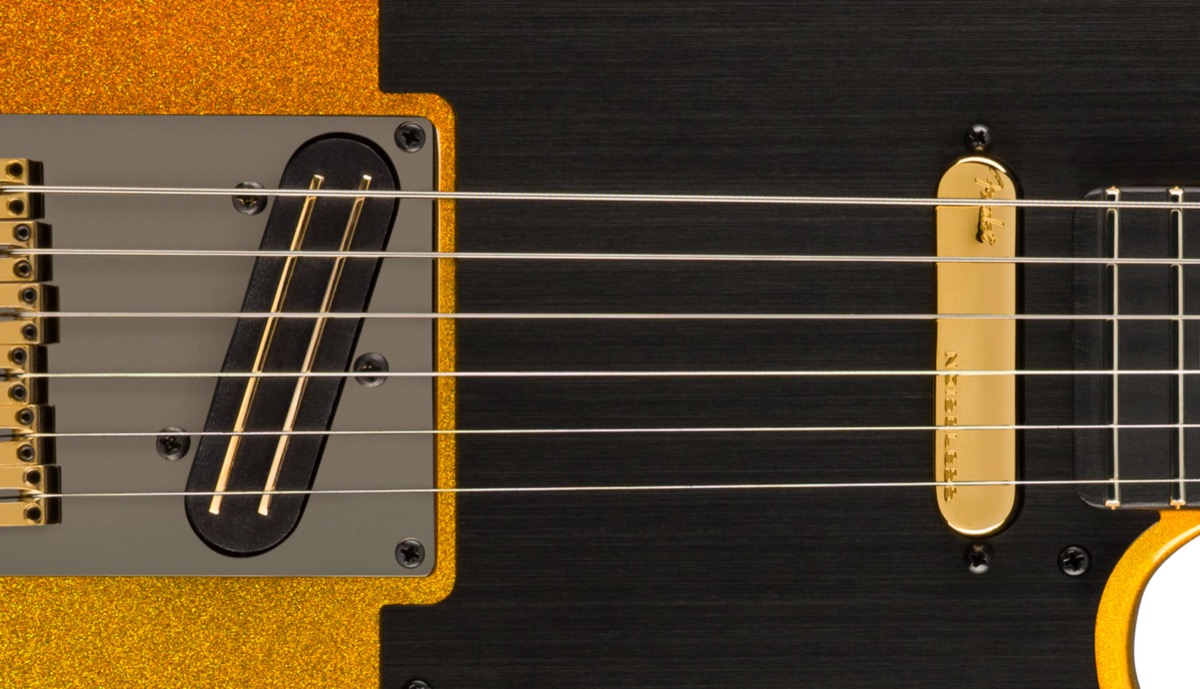
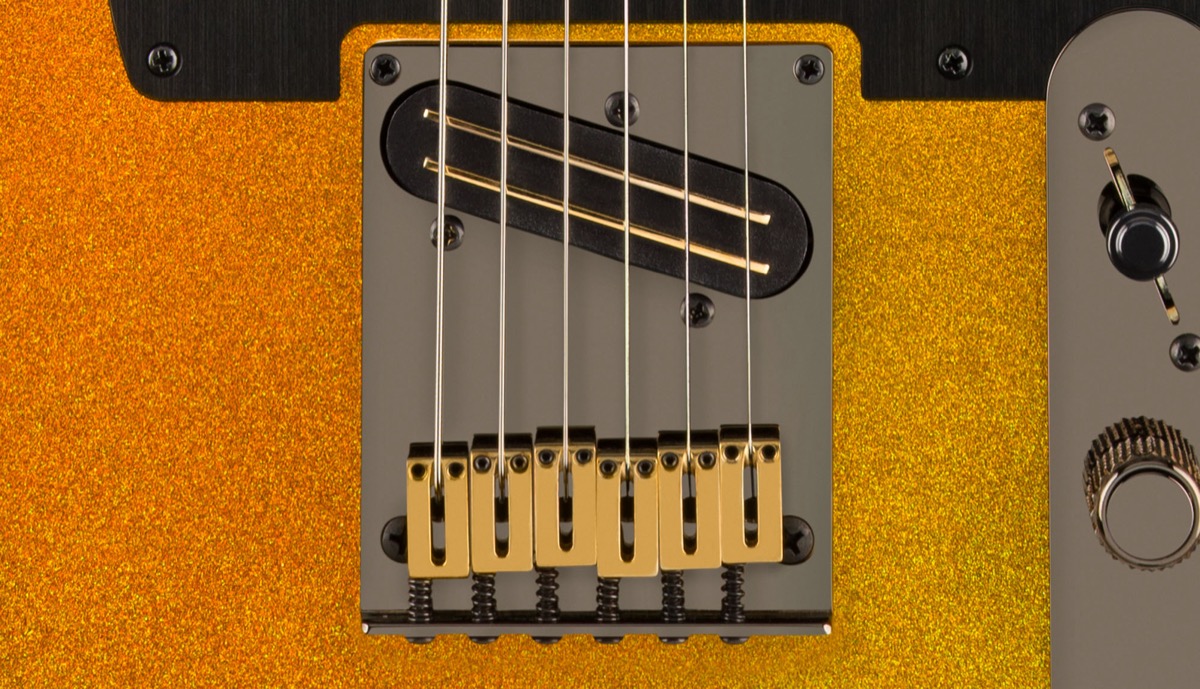
Electronics are where the anniversary money went. Seven distinct tonal foundations come out of the switching. The neck carries an Ultra Noiseless Tele unit he hears as open and bell-like. The bridge carries the 75th Anniversary Fastlane Humbucker, which Fender says is the first pickup it has built on a rail design, and it runs two ways: series for a glassy sheen that takes overdrive, parallel for snap suited to tight funk lines or Bakersfield twang. Put both pickups in series with the S-1 switch and he calls the result pure indie rock nirvana, full and beefy yet bright and alive.
The single con is narrow by any standard. The bridge pickup in parallel mode might be too thin sounding for some. One reservation, about one mode of one pickup, on an instrument the same review credits with seven usable voices. Then it signs off calling the guitar worth the hunt and the expense, which is a reviewer sending readers to the secondhand market, because he has already told them there is nothing left to buy new.
None of that can be checked against owners, because there are no owners writing. A limited anniversary run that sold out before its review published will never accumulate a public record in numbers that mean anything, and waiting for one is not a plan.
What can be checked is the platform underneath. The standard American Ultra II Telecaster carries four owner reviews on Reverb, all five stars. That is a very small sample and it deserves saying before a word of it gets quoted.
They converge, and not on what the magazine leads with. A longtime Tele owner writes that the body contours are so much more comfortable than any slab-sided Tele. A second says that for heavier use, he always found the slab body introduced a comfort issue, which is the reason he moved. A third gives a list: great clean tones, very important, comfortable to play, extremely solid, sweet with some gain.
Set the two documents side by side and the emphasis is inverted. Premier Guitar's pros lead with great extroverted looks, then the tone range, then perfect playability third. The owners lead with the body. All three quoted above put comfort or ergonomics in the first clause, and the features they are describing, the contoured bout, the belly cut, the sculpted neck heel, are exactly what the anniversary guitar inherits unchanged from the standard one.
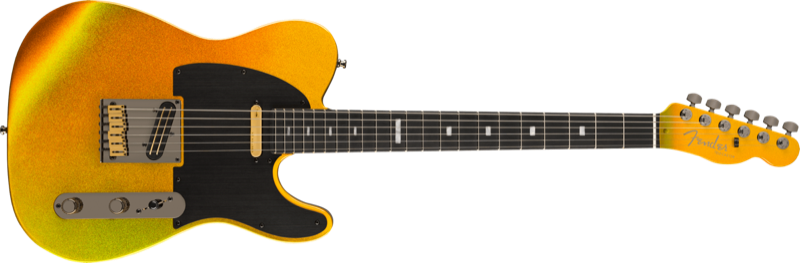
That is a real result and it is worth naming what it is not. It does not verify the 4.9. That score went to a different instrument with a different bridge pickup and a different finish. It verifies the chassis. The Fastlane rail humbucker and the iridescent liquid gold, the two things anybody paid the anniversary premium for, have no owner record at all and are not going to get one.
Which leaves the review in an odd position. Its playability claim is the part owners of the base model confirm without being asked, and playability is the part of this guitar that was never limited in the first place. The limited part is the unaudited part.
Sold out, 4.9, four sub-scores of 4.9, one con about one switch position. The scorecard is immaculate and unfalsifiable at once. Fender built the anniversary Teles and sold them before the verdict printed. What is left to check is the Telecaster you can still walk in and buy.
Spotted something the press fluffed? info@suedeai.ai
The counter, argued by Johnny Suede
Reviewing a sold-out limited edition is a service, not a failure. Some readers want to know what the anniversary model was, and the review told them, disclosure included.
The complaint here is that a review arrived after the guitar sold out, as though Premier Guitar controls Fender's allocation. Limited runs sell out on announcement now; that is the market, not the masthead. And the review disclosed it in its own text: the column's central damning fact is a line the magazine volunteered. You cannot indict someone for the evidence they handed you. A publication that hid the sold-out status would deserve the split verdict. This one printed it.
There is also a real readership for coverage of instruments you cannot buy. People who own the standard Ultra II want to know what the anniversary spec changed. People shopping the used market in two years want a contemporaneous account. Historical record is a legitimate function of a magazine, and 'nobody can act on this purchase today' is not the only test of whether a review was worth writing.
Then note what the column actually established: it went looking for owners of the platform and found four out of four calling it five stars, converging on exactly the playability claim the review made. By the post's own account the magazine's central assertion checked out everywhere it could be checked. That is a press-was-right with an availability footnote. Filing it as split lets a scheduling grievance outweigh the evidence, and the column knows it, which is why the last paragraph has to reach for the word unfalsifiable to keep the charge alive.